Samurai Road (4) — Tales from the age of the samurai
So far, we've explored fumoto in northern Satsuma that remain fairly intact. But Satsuma had a huge samurai population – as much as 40% of the total - and at peak, had about 120 fumoto districts. That means that samurai lived even in places where no trace of them is evident. Fully 800 years ago, samurai were dispatched to Kagoshima by order of the Kamakura shogunate, and 500 years ago, Warring States warlords made their way there. Here we recount some of the samurai stories that are the heritage of the northern Satsuma region.
The Goyou-ka dance for Shimazu Tadataka is still performed annually on August 8th.
Miyanojo Shimazu Clan Cemetery — Nationally Designated Historic Site
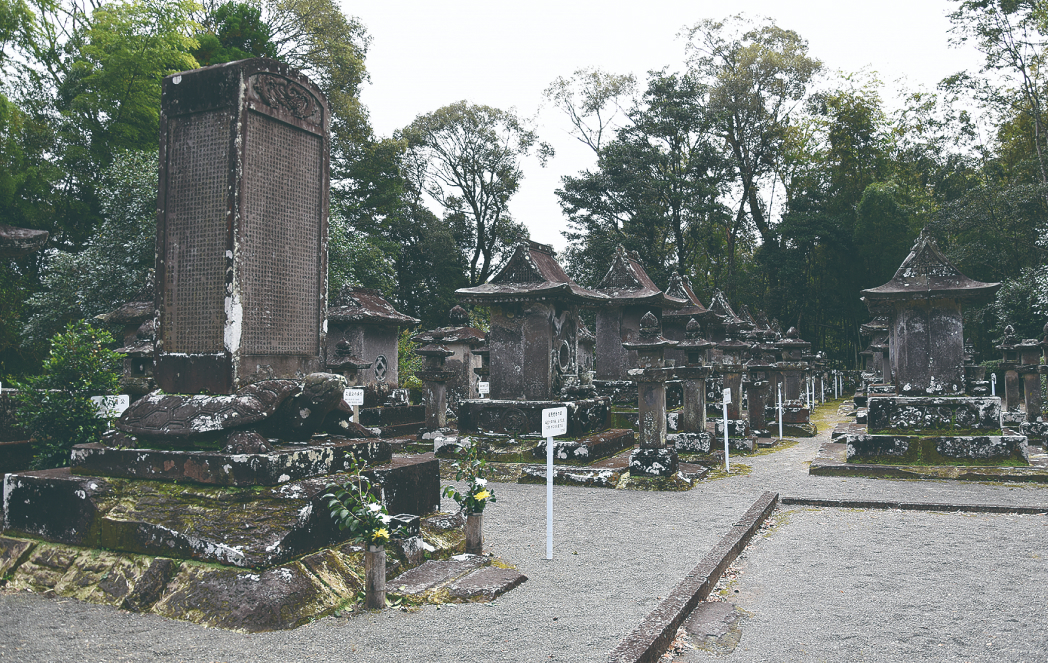
The Miyanojo Shimazu clan governed here from about 1610–1870, and its many famous lords held important Satsuma-domain positions. Hisaharu, the 15th family head, established a school and martial-arts training academy, and from the 1870s on, the family donated land for building schools, to help modernize their hometown. Soukouji Park, a nationally designated Historic Site, is home to the family cemetery and Kyushu's largest group of gravestones.
0996-53-1732 (Satsuma-cho Social Education Division)
A rare seaside castle, site of fierce battles — Douzaki Castle Ruins
At the center of the group of gravestones is the Sosen Sekouhi (Ancestors’ Merit Monu ment). It is perched on the back of a turtle and bears inscriptions related to the Miyanojo Shimazu. It is said that if you interpret the inscriptions correctly, the turtle will come to life.
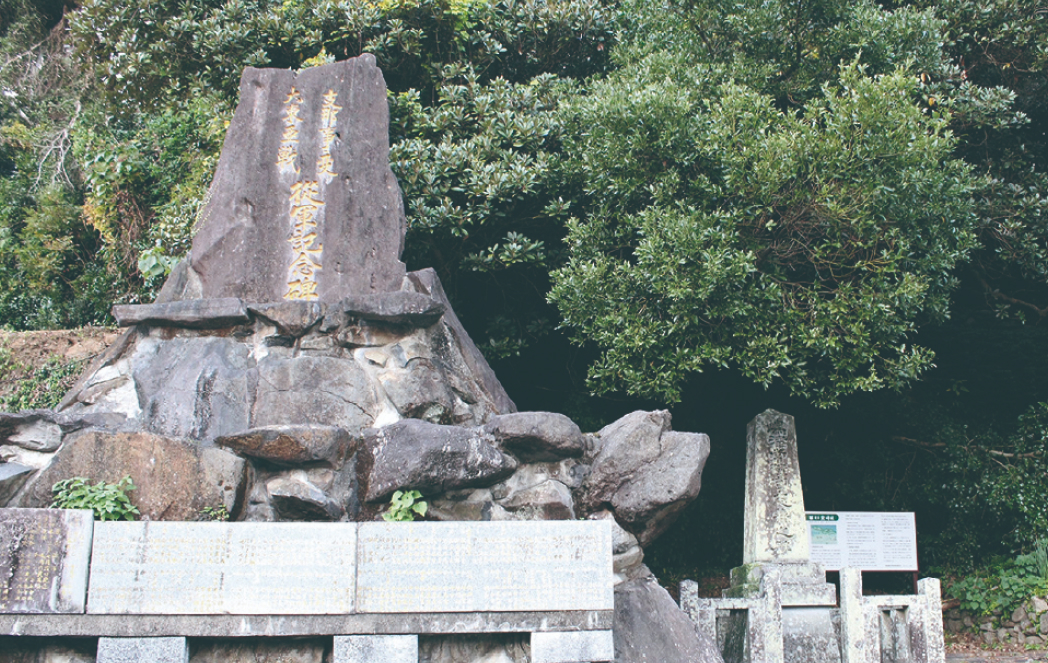
The Douzaki Castle Ruins are located on a cape that juts into the sea. The exact date of construction is unknown, but the fort is believed to date back at least to the mid-14th century. It was taken over by a neighboring lord named Amakusa during the civil wars of the 16th century. But all the neighboring warlords coveted the territory because it was a hub for lucrative trading. Shimazu Tadakane was one to emerge victorious in a fierce battle in 1565, but just three months later, he was killed by his nephew, Shimazu Yoshitora. An epidemic broke out shortly thereafter, and the locals, fearful of a Tadakane curse, performed dances on the anniversary of his death to appease his spirit.
Hideyoshi's path to unifying Japan was through Northern Satsuma
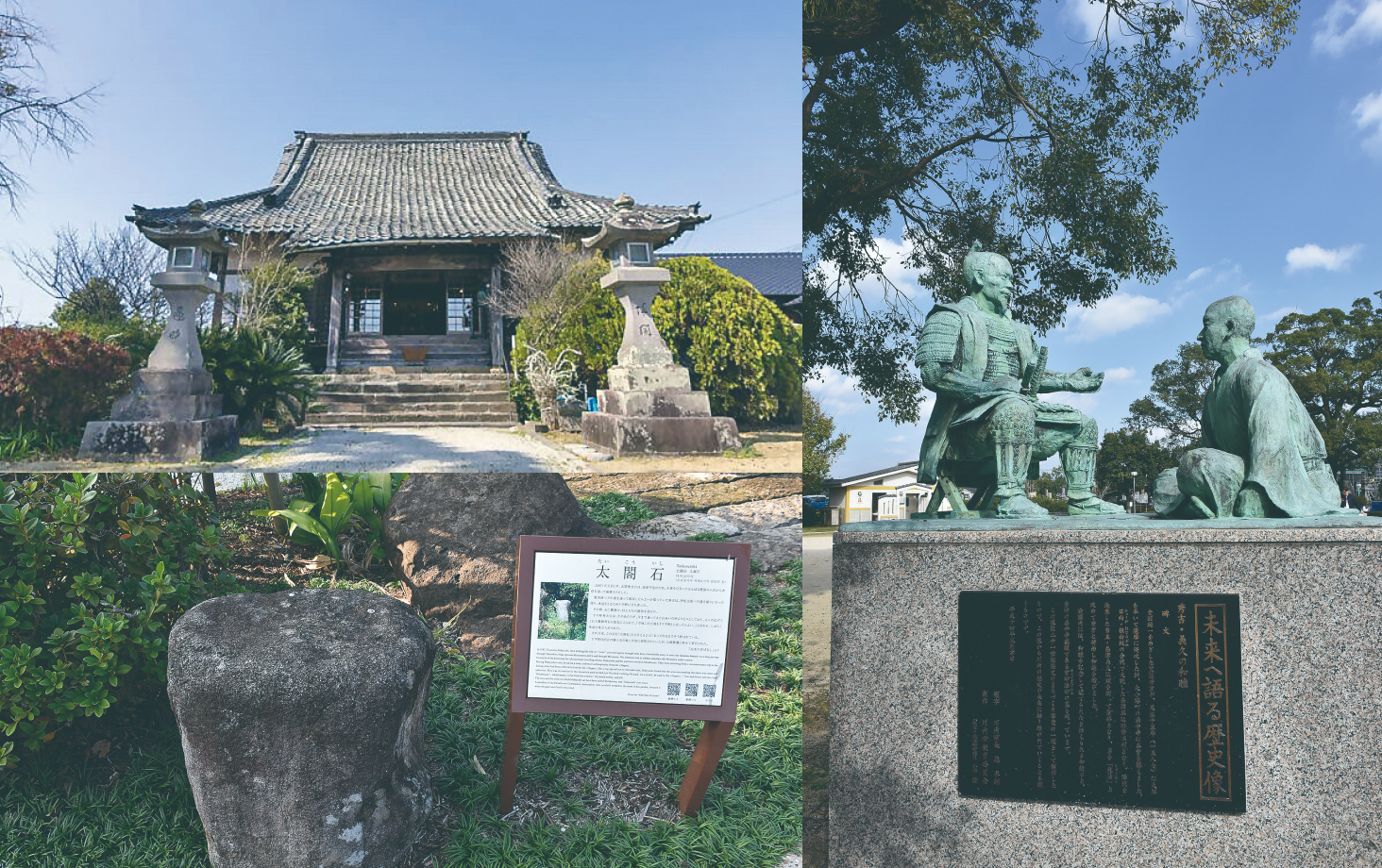
Toyotomi Hideyoshi was the great 16th-century overlord who unified Japan after centuries of division. His last enemy was the Kyushu overlord Shimazu Yoshihisa. Hideyoshi attacked with a horde of some 200,000 men and forced the famously courageous Shimazu army to its knees. At Taiheiji Temple in Satsuma-sendai, Yoshihisa, shaving his head, pledged allegiance to Hideyoshi. A statue of Yoshihisa bowing to Hideyoshi is in a neighboring park. Hideyoshi is said to have sat on a certain stone in Izumi City (Taiko Stone, named for him). Some local lore says sitting there will bring you success. On the other hand, others warn that it brings defeat…
Right: Yoshihisa became a Buddhist monk in order to protect the Shimazu family and its retainers. Taiheiji Temple, founded in the 8th century, has row of temple stones that commemorate the peace between Hideyoshi and Yoshihisa.Left: The Taiko Stone is on display in Izumi Fumoto. You are welcome to try sitting on it.