
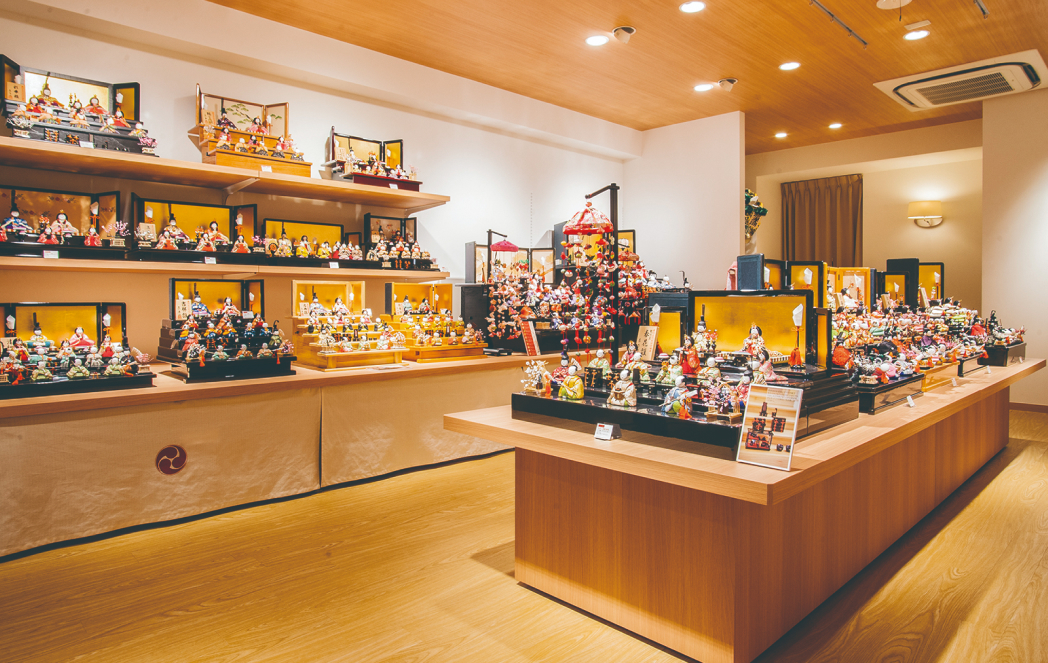
Since 1911, Carrying on the Tradition of Crafting Japanese Dolls
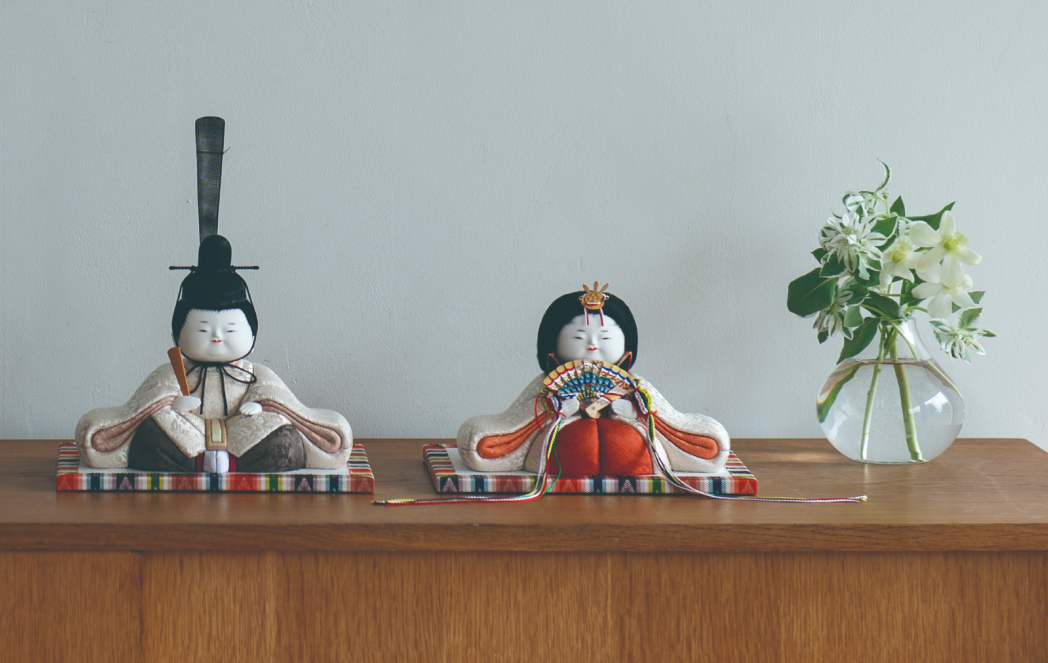
The observances to pray for children's health and happiness are passed down through the generations in Japan. Families display dolls dressed in ancient court costumes for Hinamatsuri (Dolls' Day or Girls' Day) on March 3rd, and helmets, armor, and warrior dolls for Tango-no-Sekku (Boys' Festival or Children's Day) on May 5th.
The dolls made by Goshiki for these occasions are in the kimekomi style: they have sweet faces and rounded bodies made of hardened wood powder, carved with grooves, and dressed in silk. Highly skilled artisans also work with Japanese paper, lacquer, and metal fittings to make the intricate helmets and armor that can fit in the palm of your hand. Small as the items are, they fully convey the beauty of their history and the craftsmanship that goes into them.
Third-generation owner Hara Hiroko studied design in England. She envisions Goshiki as a center for conveying the essence of Japanese culture — its respect for nature and belief that deities reside in everything around us. Feeling a sense of urgency at the challenges facing traditional craftsmanship — kimono are no longer widely worn, craft techniques are in danger of vanishing, and the production of materials such as linen is also in decline — she designed a haori jacket made entirely in Japan, from the linen fabric to the assembly. It is strong and stylish: it goes well with Western-style clothing. And, says Ms. Hara, "Linen is very breathable, and surprisingly cool in the summer and warm in the winter."
For visitors from abroad, Hara Koushu also offers doll-crafting workshops and lectures on Hinamatsuri and Tango-no-sekku customs, traditional interior décor, and other facets of Japanese culture.

The haori comes in white, black, ivory, and khaki.
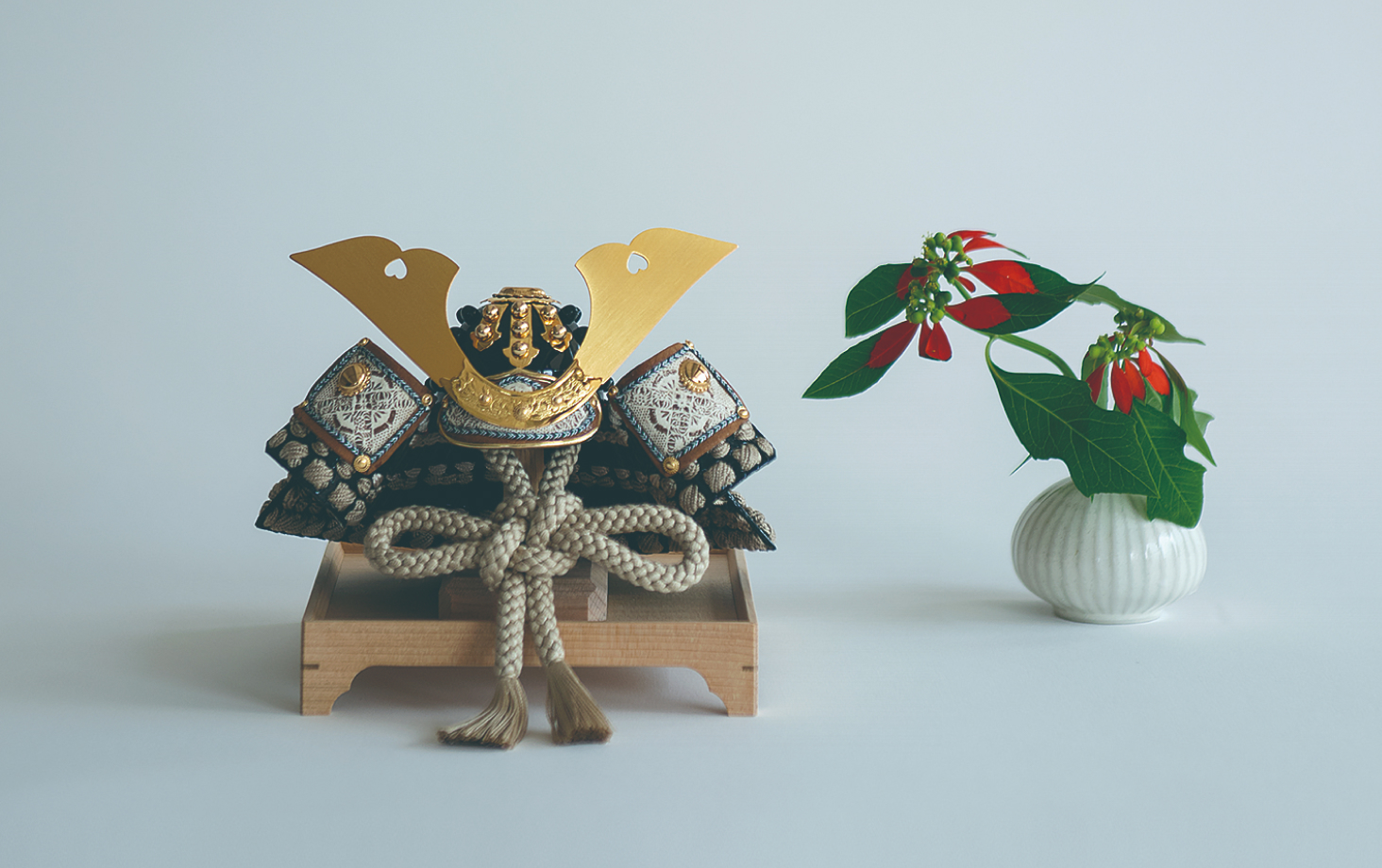
Helmets and armor represent the protective gear used in battle, but they also serve as amulets to ward off evil.