
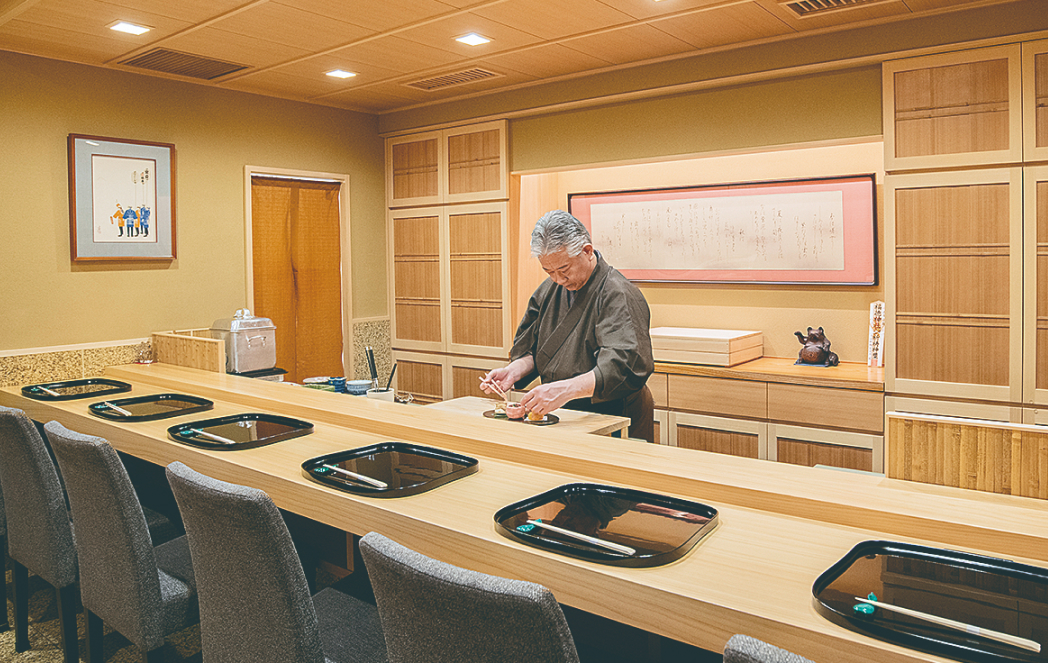
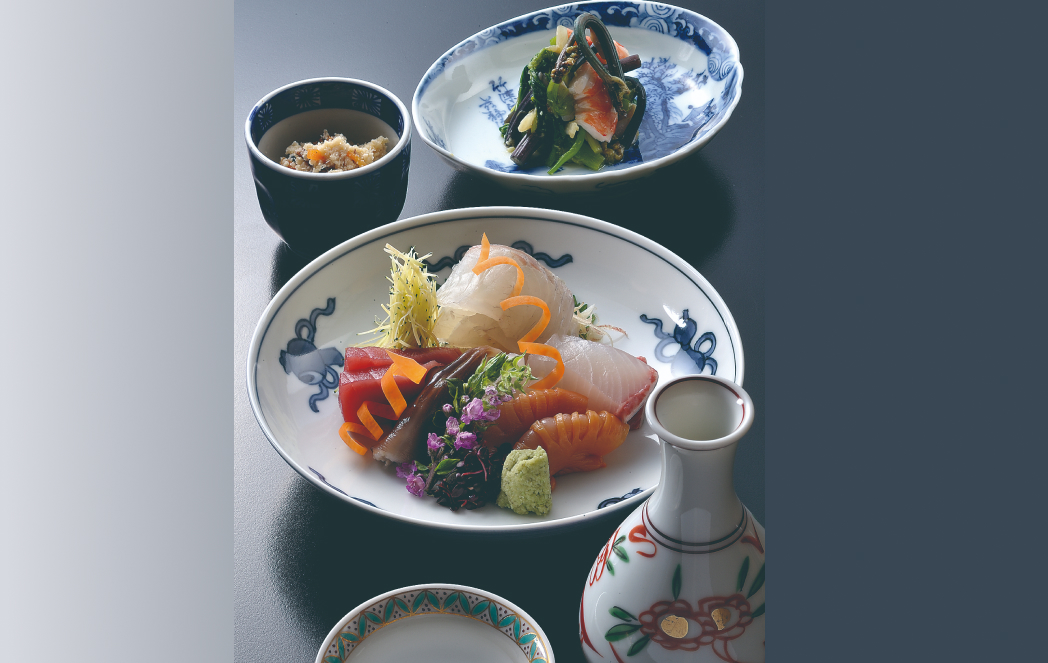
The food, the setting, the hospitality – These are why Toyoda is in its fifth generation
Nihonbashi flourished from the 17th through 19th centuries as a center of transportation, logistics, commerce, and finance. Its history lives on today and it is home to many multi-generation businesses. Nihonbashi Toyoda, founded in 1863, is one such example.
Founder Toyoda Yonekichi began with a sushi stall, then opened a restaurant and sushi shop in 1872. The restaurant was destroyed in the great 1923 earthquake but was rebuilt on the same spot five years later, thanks to its many loyal customers; it also survived the war twenty years later. Now in its fifth generation, it maintains the Japanese cuisine culture of its roots.
Toyoda's present owner, Hashimoto Toru, has been cooking for 45 years. He has served as chef for Imperial events and for the Japanese Embassy in Germany. Toyoda offers kaiseki set meals featuring appetizers, sashimi, grilled dishes, and rice. Kaiseki cuisine, which turns high-quality Japanese ingredients into exquisite dishes through its artisans' skill, is the essence of Japanese food culture. "We change our ingredients, cooking methods, and room layout with the seasons," Hashimoto says.
"We sometimes talk with customers over the counter and explain our seasonal dishes. We hope that guests will enjoy these elements of Japanese culture along with their food." Experience Toyoda's flavors and hospitality and you will understand why this restaurant has endured for so long.
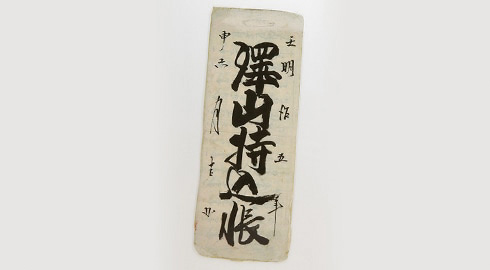
The Takusan Mochikomicho is a record of the gifts the restaurant received when it was newly built. The long list of names indicates how many customers patronized it.
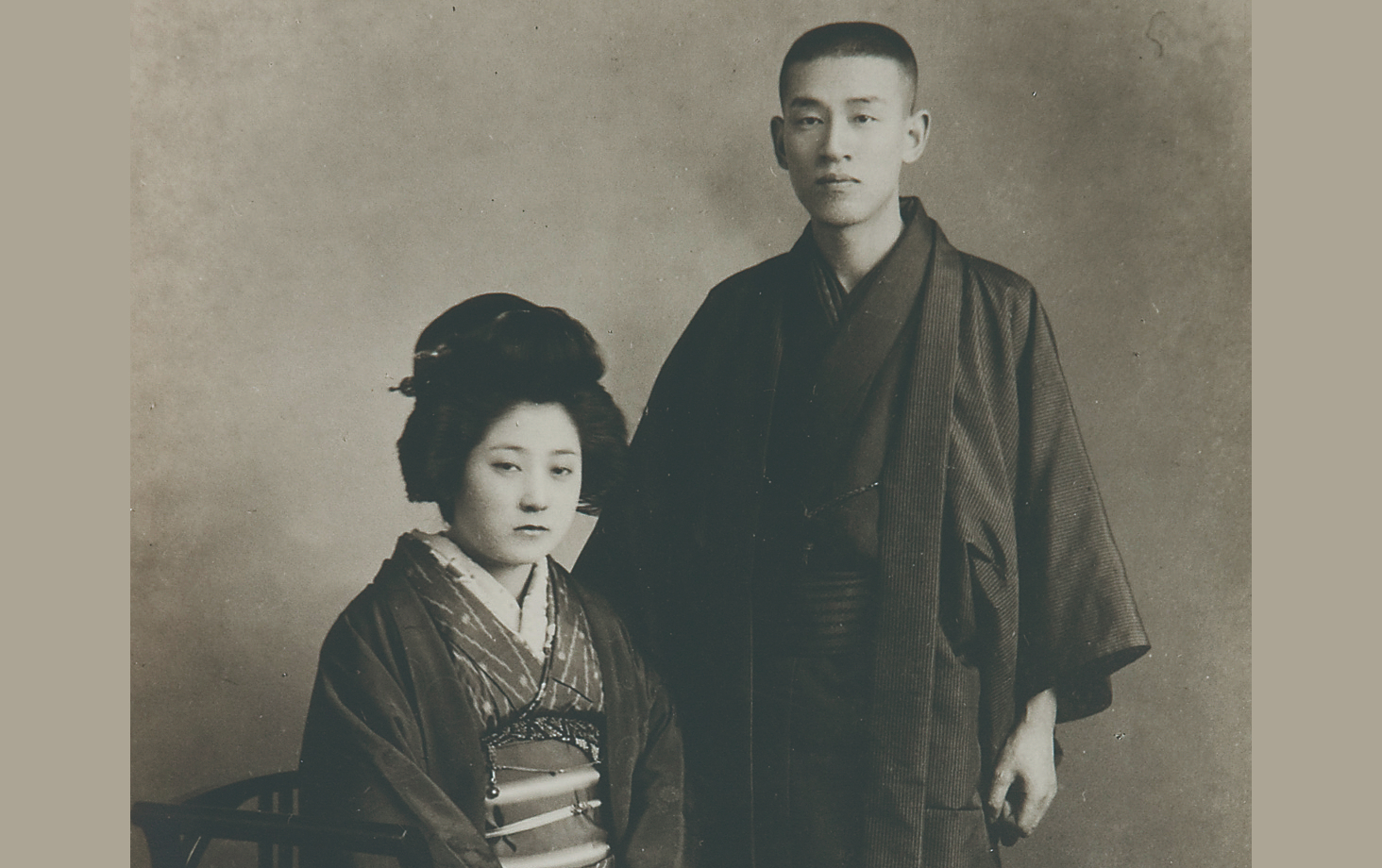
The family took the surname Hashimoto in the second generation. Shown here are third-generation Hashimoto Toyokichi and his wife, Kume. Toyokichi was a strict, artisan-like chef.
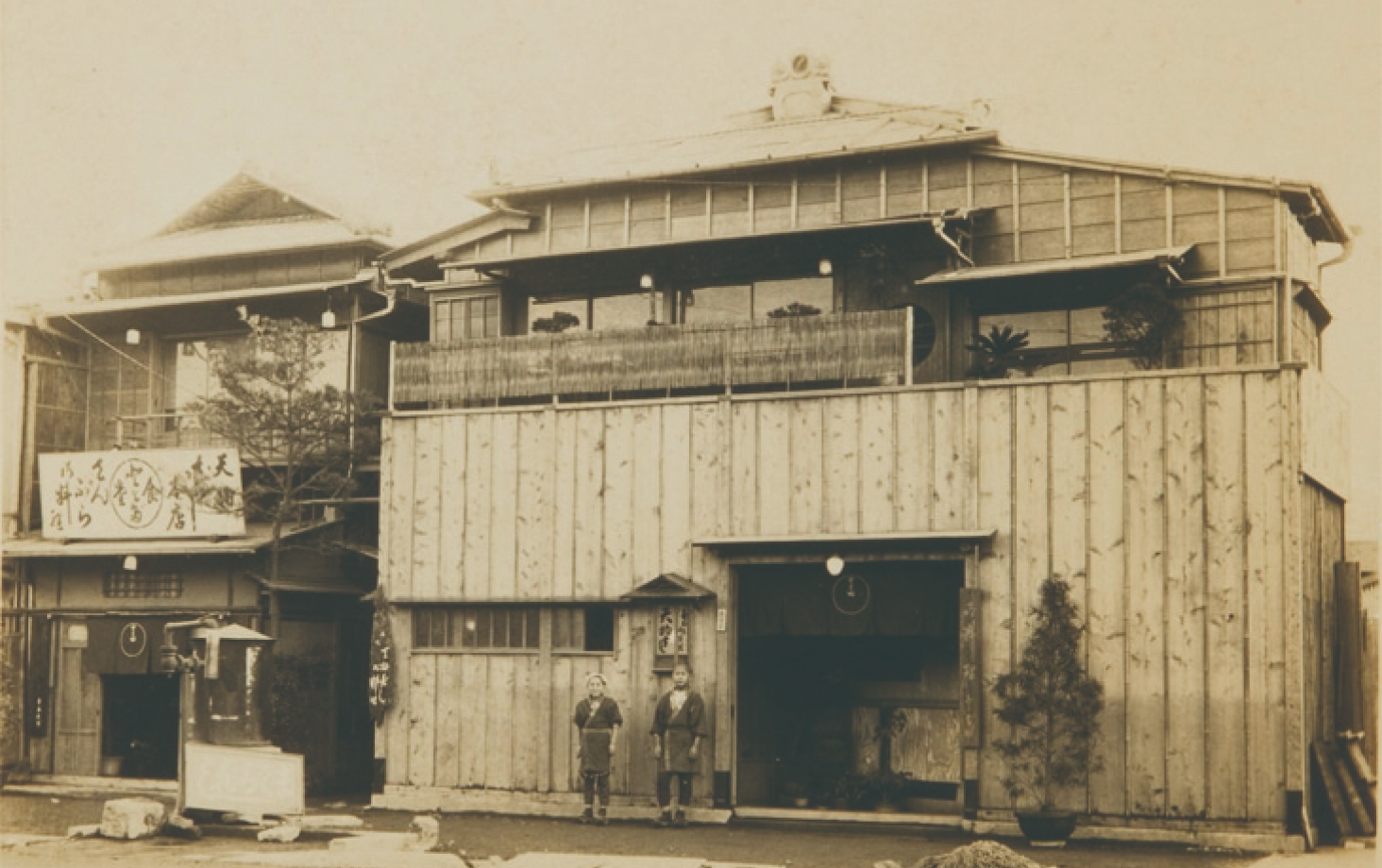
The newly renovated restaurants in 1872 — sushi shop on the left, restaurant on the right. These structures remained until their destruction in the Great Kanto Earthquake of 1923.