
Experience the Captivating Beauty of Japanese Swords
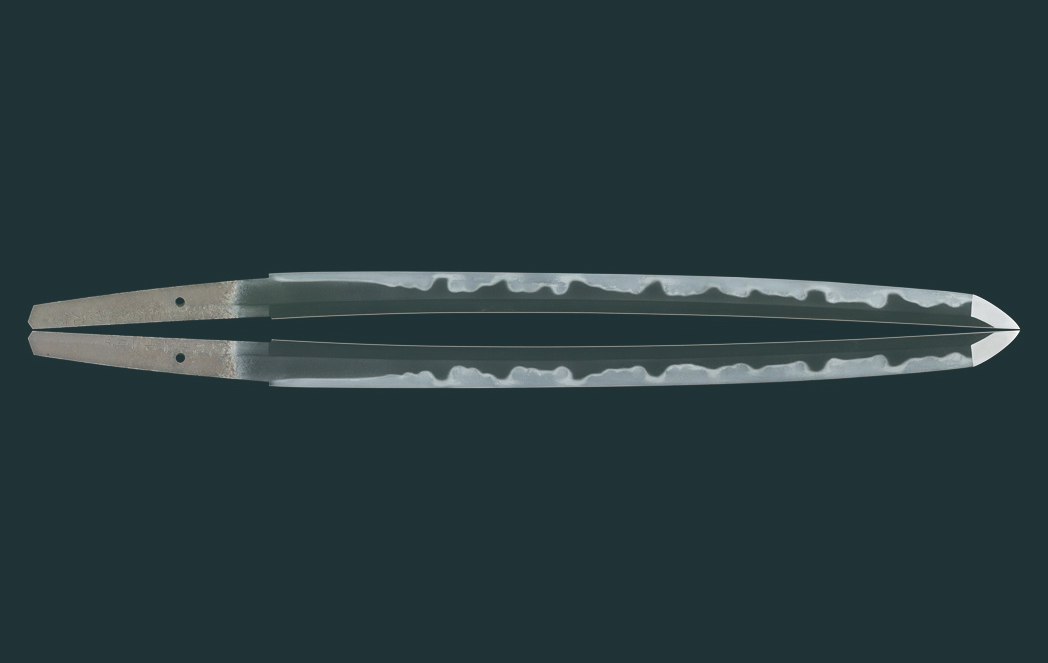
Tamahagane steel, made of iron sand, is heated to high temperatures, flattened, and hammered to remove impurities, then doubled, heated once more, and hammered again — in a process repeated as many as 15 times. The result is a Japanese sword with 33,000 layers of hard, high-carbon kawagane steel encasing a softer core of shingane steel — sharp, flexible, and unbreakable.
Second-generation owner Matsumoto Yoshiyuki shares the unique beauty of Japanese swords — stripped of waste, with pure, iron-colored blades, and tempering patterns that emerge in the light. "There are a few basic etiquette rules you should know when you pick up a sword at a sword shop," says Matsumoto. "If you're removing the sword from its sheath, face the cutting edge upwards and pull it gently toward yourself. When handing it to someone, face the cutting edge toward yourself. Use a protective cloth when touching any part of the blade other than the handle. Practices vary slightly from shop to shop, but it's definitely good to remember the basics. The appeal of a sword can only truly be felt by holding it in your hands. Please do come and take a look."
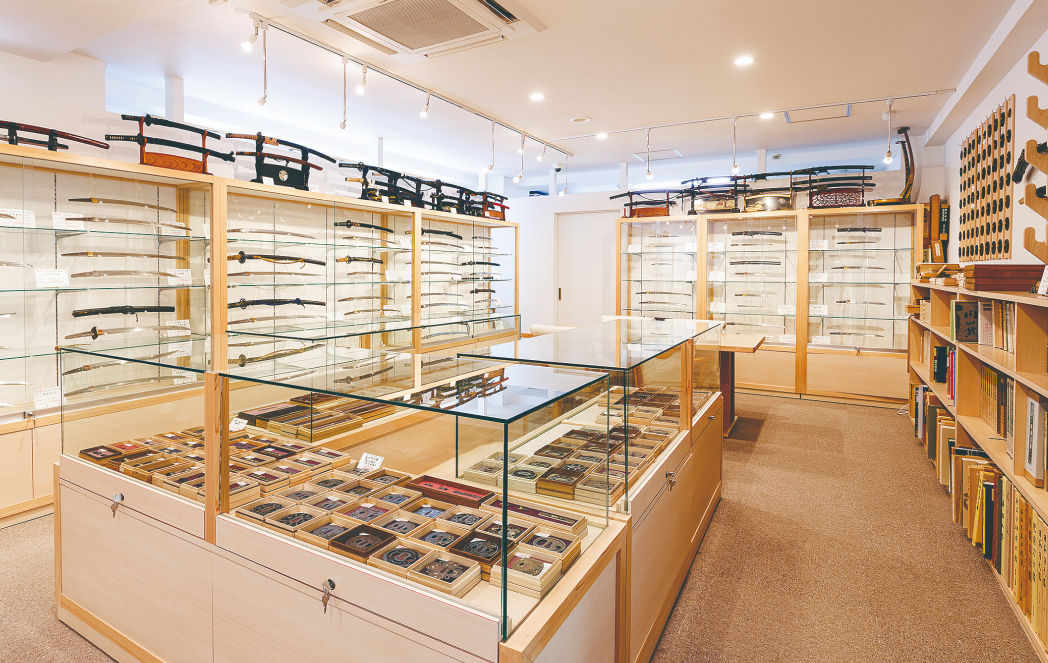
The shop carries swords with lineages dating back to the 13th century and others crafted by modern swordsmiths. A sword shop is like a guide to the beauty and nobility of Japanese swords, says Matsumoto. "We provide demonstrations and instruction to customers on how to handle, store, and care for their swords. The reason these swords are in such beautiful condition is because they've been passed down, as if in a relay of owners, through hundreds of years. We hope that customers will appreciate not only their beauty but also the joy of being entrusted with a part of their history."

From left, Choo Misun, owner Matsumoto Yoshiyuki, store manager Hattori Syunya