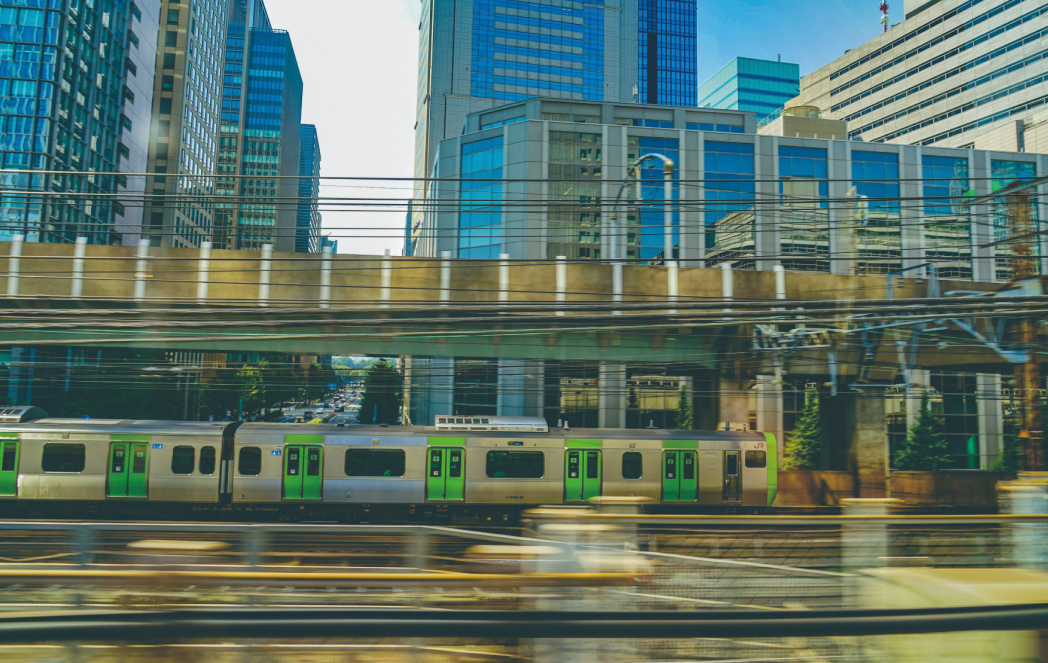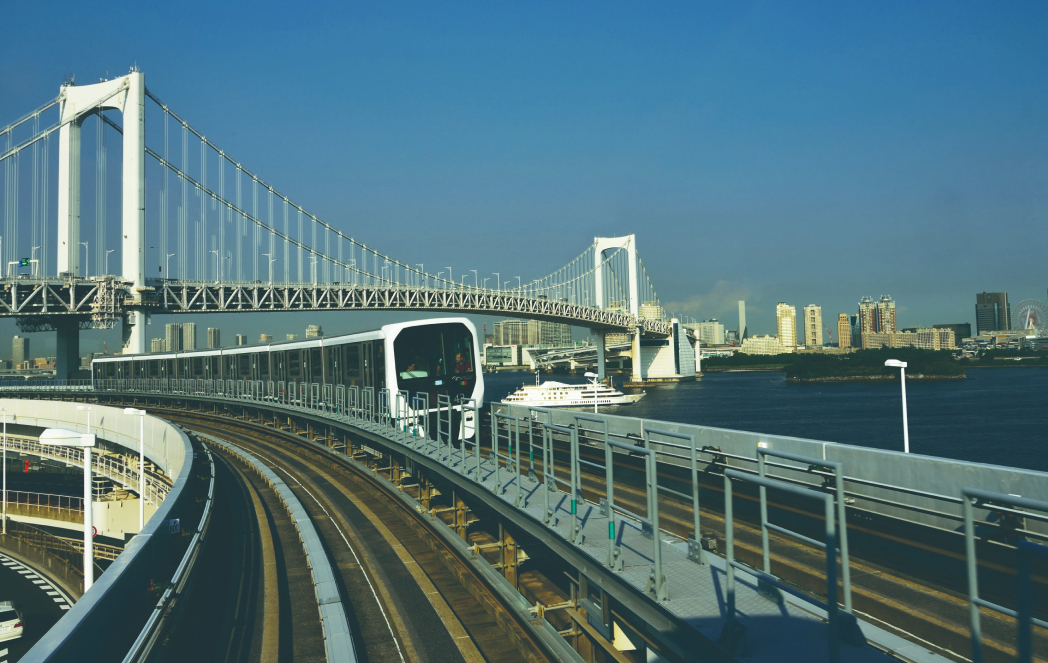
If you're having a jetlagged day in Tokyo but don't want to nap at your hotel, board an elevated train. Take a seat; fall asleep (no problem, everyone does); enjoy looking onto the streets below and into the offices across the way. Get off to explore when something strikes your fancy. You can always hop right back on. The orange crosstown Chuo offers up Tokyo from city center out into the mountains. Driverless Yurikamome weaves around waterfront skyscrapers for surreal views of Tokyo Bay. The lime-green Yamanote loop line: it parades Tokyo - eye-popping, refined, or homey - and returns you back where you started, one hour later.
You probably know that Japan's trains are punctual and ubiquitous. Likely you're planning an iconic bullet-train trip, and have read that a right-side seat from Tokyo to Kyoto can have fabulous Mt. Fuji views.
But Japan's trains are more than outstanding transport. For generations, riding the train has probably been the most universally shared experience in Japan – other than paying taxes and going to school.
Fully 125 years ago, a savvy publisher created a Railway Song with a verse for each stop on Japan's major rail line. 100,000 copies of the sheet music sold out immediately, and the song retained best-seller status for decades, taking on new verses till it was an hour-and-a-half long!
Ever since, the entire nation has shared a (railway) map of cultural references. Stations and lines are landmarks in their own right. Once, over-crowded "commuter hell" trains were synonymous with Japan. Today, the image is punctuality, cleanliness, and convenience.
Did the railways create today's Japan, or are they a reflection of it? It hardly matters. The more you ride them, the more you'll feel part of this place you've come to see. You'll absorb local rhythms and pacing; you'll get a feel for the daily grind, the fun and the frolic. The scale of the traffic will become familiar – but notice also how traffic management works. And the stations: the food, the shopping, those glorious bathrooms – what expectations do they set for quality and design?
Customize your experience. With scores of sightseeing trains and hundreds of rail lines, you have your pick of spectacular nature, celebrity architecture, living folk culture; the humorous, the nostalgic, the convivial... For a journey of unparalleled luxury: the Seven Stars Cruise Line (Kyushu) and Train Suite Shikishima (east Japan). For sake afficionados: the Koshino Shu*Kura (Japan Alps); for local cuisines: the Tohoku Emotion (north) and Twilight Express Mizukaze (west). Find "remote-station heaven" on the Iida Line (central Japan). Enjoy your kids enjoying the Pikachu (northeast) and Anpanman (Shikoku) trains.
Or maybe you just want to keep riding that lime-green Yamanote train round and round the loop...