From an era of war to an era of peace — Building new systems for new times
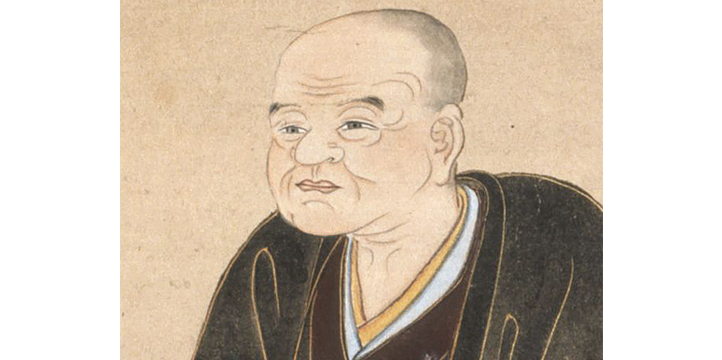
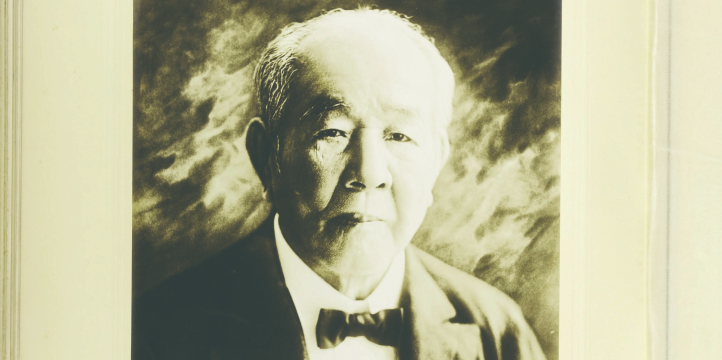
ED: Mitsui Takatoshi (1622–94) and Shibusawa Eiichi (1840–1931) were both iconic figures in their own times. Do the two eras have anything in common?
Mura:
Both men lived in entirely new times: Mitsui just after the end of fierce civil wars and Shibusawa after the ancien régime's collapse. Mitsui was born less than 20 years after the Tokugawa shogunate unified Japan and established the first comprehensive peace in Japan's history. Peace means people are less likely to suddenly lose all they own to violence. By the time Mitsui was active in the late 1600s, people had begun to believe that peace would last. They could therefore begin to plan for their descendants' future.
Kuwabara:
Shibusawa Eiichi famously used to say, "Look towards the future, even 100 years out." His youth coincided with the strife at the end of Edo rule, but he was raised in a farm village (Chiaraijima, today's Fukaya City in Saitama Prefecture) that had long been home to serious learning and martial arts. His upbringing in that environment gave him the confidence to act with an eye to the future.
Mura:
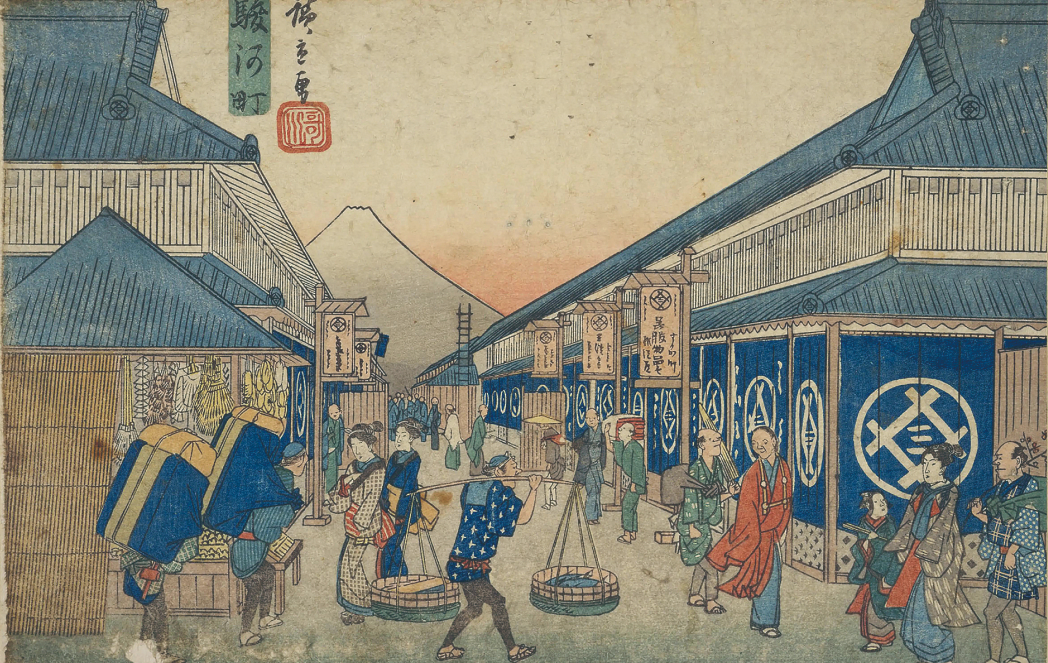
The flourishing domestic market of Shibusawa's time had come into being thanks to the Tokugawa peace. Early in the 1600s, the shogunate restricted the lucrative international trade dominated by western Japan. It also restructured Japan's domestic distribution networks. A remarkable economic development ensued, in which the Mitsui house, among others, rose to wealth and prominence. Mitsui was well aware of these changes, and said, "Never forget your gratitude to the Shogun: goods and money can circulate because peace is maintained."
Kuwabara:
The Shibusawa family not only manufactured and sold indigo dye locally but also actively conducted business with commercial dyers across domain lines. In his early adulthood, Japan faced mounting domestic and international crises. But it did not return to the endemic civil war that had preceded Tokugawa rule; rather, people in the late Tokugawa period seem to have continued planning for the future even as they faced these new anxieties.
Mura:
After over 200 years of peace, it was hard to imagine war. Peace had begun to seem real by about the late 1600s, and people had embraced an ethos of family continuity that included paying homage to ancestors (and therefore to oneself after one's own death) and aspiring to prosperity for descendants. The "Mitsui House" included both blood relations and employees, numbering as many as 1,000 at one stage. In Mitsui's second generation, the business hired employees who were single and later gave them startup funds for their own businesses and permission to use the Mitsui brand name. They then married and established their own households alongside their businesses. It was a system that assured Mitsui a steady supply of employees who had a stake in its continued prosperity for the sake of their own descendants.
Kuwabara:
Family perpetuation remained important in Shibusawa's time, but stronger still was the village community's ethic of coexistence and mutual prosperity. In 1867, accompanying the shogun's emissary to the World's Fair in Paris, France, Shibusawa learned about various advanced industries and economic systems. The system of joint-stock companies particularly resonated with him. He saw them as "cooperative capitalism" — a way that businesses could assemble capital and the most suitable people and thereby achieve the aims of the public good. I believe he saw them as akin to the village-community system. Once the Tokugawa regime was replaced by a new government in 1868, he dedicated himself to building many such corporations. In his view, the purpose of business was not merely to build private wealth but to serve the public interest by building the industries needed by society.
Rethinking our priorities and practices in a time of divided values
ED: Both the Mitsui house, from Takatoshi on, and Shibusawa Eiichi come up frequently in discussions of the Japanese economy today. Why is that?
Mura:
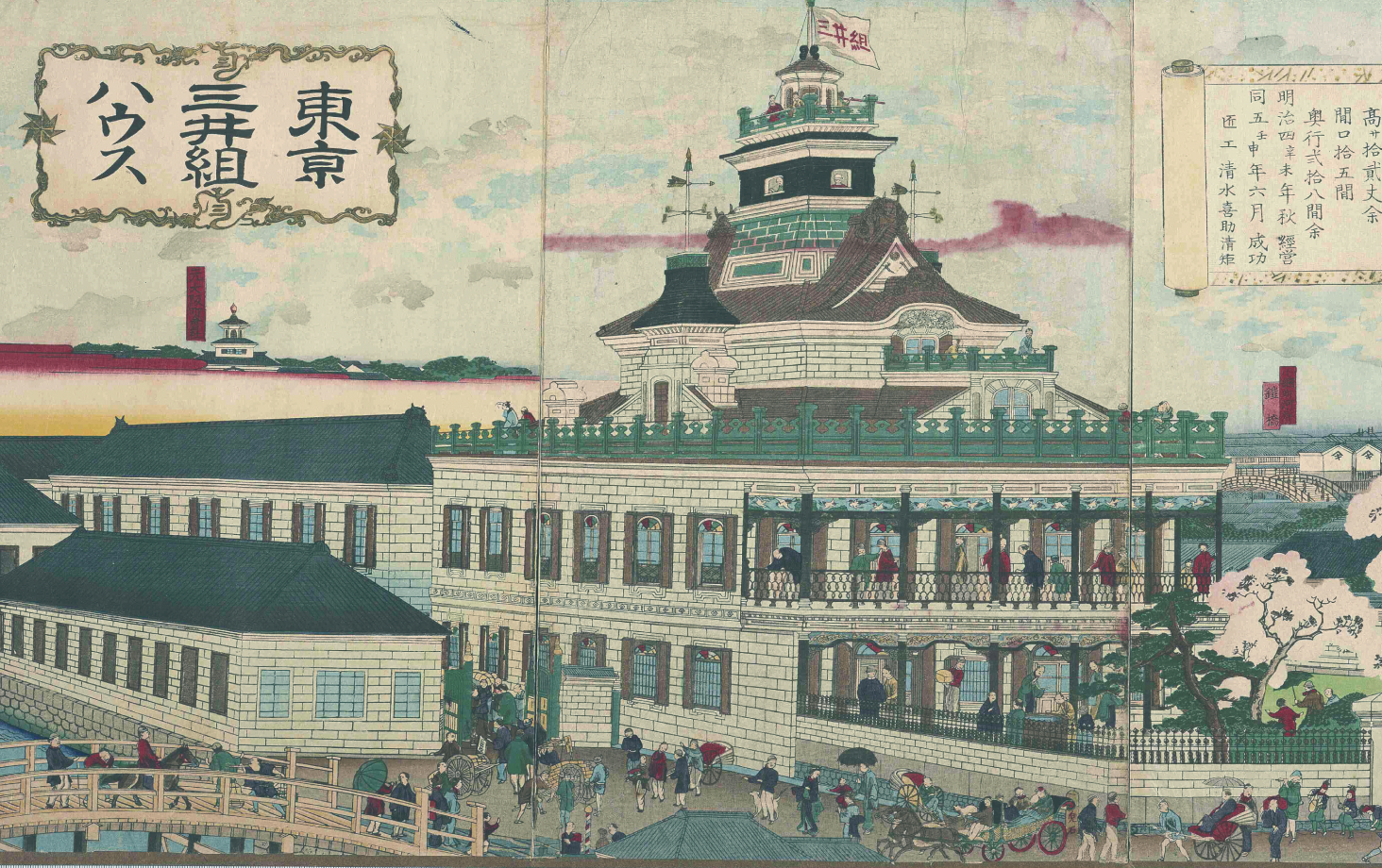
In Mitsui's case, the first reason is the wealth of detailed documents preserved by the company, some 45,000 from the pre-1868 period alone. These are more accessible than general statements of theory or principle. Values and business needs change with the times, but there will always be something useful to be derived from so extensive a record of concrete debates, actions, trial and error. Ancient-world texts, such as the bible and the Confucian Analects, have this character, too. A second reason is that the actions the company took lasted so long and their outcomes remain so plainly evident even today. Three hundred years have passed since Mitsui became famous throughout Japan, but many major companies still have the Mitsui name.
Kuwabara:
Shibusawa's own words are also recorded in magazines, books, and newspapers, and he also shared his thinking in the book, The Analects and the Abacus, which has been widely read ever since it was published. In the 80 years since the end of World War II, people have returned to Shibusawa's ideas every time Japan has faced a turning point, such as the 1990s collapse of the bubble or the Lehman Shock in 2008. In this sense, Shibusawa's thinking lives on even today.
ED: What can we learn today from the way they lived?
Kuwabara:
In his radio talks and other speeches in the 1920s, Shibusawa stressed that world peace could be maintained by promoting the smooth movement of people and goods and supporting mutual coexistence and prosperity. What he called the "unity of morality and economics" is the theme of The Analects and the Abacus. It is based on his idea that each of us is a member of society, and that we must act not just for ourselves but with society and the people around us always foremost in our minds, using our efforts to help them develop. It is this balance that truly enriches the soul. I feel that young people are increasingly turning to such ideas today.
Mura:
From a modern perspective, the social values of the eras in which the two men lived were consistent. Mitsui's time was one of peace, and everyone began to work hard to ensure the prosperity of their families. Economic historian Hayami Akira calls this Japan's "Industrious Revolution." Shibusawa lived in a time when Japan as a whole was trying to catch up with the West. The periods just preceding them were times of great bloodshed and division — the civil wars of the 16th century and the collapse of the shogunate in the 19th.
As society began embracing shared values early in the new era of peace, the Mitsui House created systems that could realize those values on a sustainable basis, and their success became important models for others. Similar practices began taking hold and gaining influence in other parts of society, and although many new problems arose, they also helped establish the underpinnings for a peaceful and stable society. We now live in a divisive age. We need to believe that this will pass, and to consider what values we can share in our new era and what we can do to make them a concrete reality.
Kuwabara:
I think what is amazing about Shibusawa is that he didn't go it alone. In any organization, it is faster and easier to work solo, but Shibusawa valued harmony among all stakeholders — the house where he was born, then his village, the local community, the country, and finally the world. I believe that his dedication to creating new things by building connections among people and between countries is something we can learn from today.