Making His Way to Edo at Age 14 — Refining his business sense with a wide array of customers
The youngest of four sons and four daughters, Takatoshi was trained by his mother, a skilled businesswoman in her own right. He made his first trip to Edo — 380km — at age 14, with a small load of cotton in tow. His eldest brother, Toshitsugu, who had already run three stores in the Nihonbashi district of Edo, including a kimono shop, was now a purchasing agent in Kyoto, and the Edo stores were entrusted to another brother, Shigetoshi. Under his supervision, Takatoshi soon displayed the diligence and innate business acumen he inherited from his mother. At age 20, he took over the stores and Shigetoshi returned home to help their mother.
He tailored deposit and payment plans to his customers, and keeping in mind the prices provincial markets could bear, was careful not to set prices too high for his rural buyers. His skills are said to have surpassed those of his brothers. When he first took over the business, the stores had 375 kg in silver cash; in the next eight years, they had amassed fifteen times that. He invested in a home in Edo and the business was running smoothly, but when Shigetoshi died, Takatoshi had to return to his hometown to help his mother. He’d built the small load of cotton he had brought with him to Edo years earlier into a fortune. The man he named to succeed him as manager was also hugely successful, and under the name Echigoya Shobe’e, helped support yet another brother’s business.
Takatoshi's quiet middle years in Matsusaka — Twenty years' work anticipating his business launch in Edo
Takatoshi returned to Matsusaka in 1649, at age 28, where he married Kane, eldest daughter of the prominent Nakagawa family. With his Edo savings, he went into finance, steadily building up his capital and credit. The Kishu-Tokugawa domain lords were among his clients, as were local villages needing advances to cover their annual tax payments. He also formed networks of regional and kinship ties with wealthy merchants locally and in the areas where his sister and aunts were married.
One telling episode of Takatoshi's business acumen occurred when he lent the sizable sum of 2,044 ryo* in silver (equivalent to 3,000 koku of rice) to the Ise daimyo lord, only to make it back twice over because the value of silver doubled relative to rice in the next year. He anticipated the market trends in the price of rice, in other words, lending when rice was cheap and collecting when it was expensive. As his third son, Takaharu, said: "Such ingenuity was beyond the reach of ordinary people."
Takatoshi meanwhile sent each of his three sons, Takahira, Takatomi, and Takaharu, as well as his clerks, to train with his brother in Edo when they turned 15. The city of Edo had been destroyed by fire in 1657, but reconstruction and the development of the Sumida River's east bank set off a huge expansion. He and his sons wrote each other regularly, so he was kept abreast of the latest news of Edo.
With his earnings from his finance business, his well-trained sons, and the information he gathered about Edo, Takatoshi was ready to set up shop in Edo. When his older brother, Toshitsugu, passed away in 1675, Takatoshi finally made his move.
* Currency values fluctuated, but one ryo would be worth about ¥100,000 today. One bu was one-quarter of one ryo. One koku of rice was about 150 kg
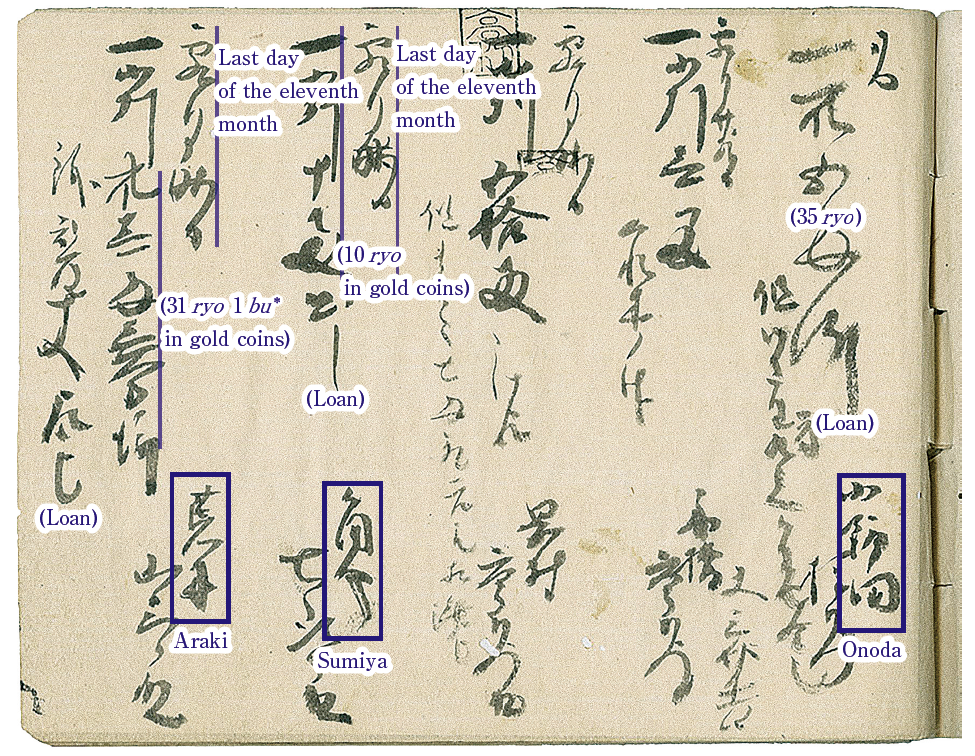
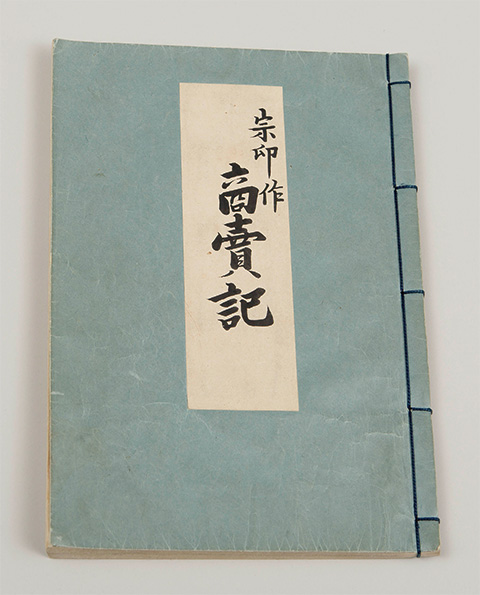
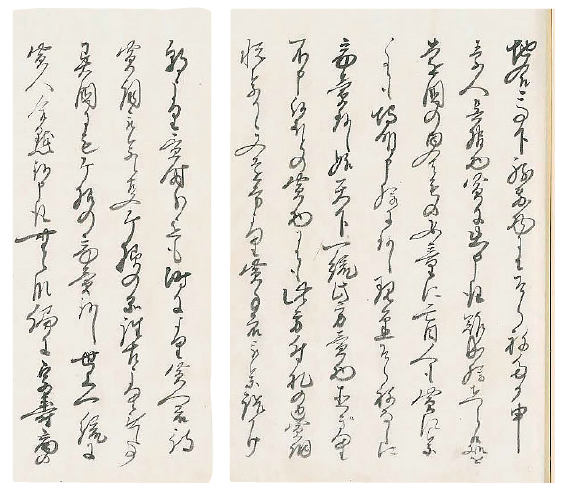
"Yorozu-kari-cho"
Mitsui's oldest surviving business record: this 1699 transaction ledger was kept by Takatoshi himself and gives us a glimpse of his Matsusaka days. The trading partners who appear here were all wealthy area merchants, indicating that he himself was a powerful businessman. (Mitsui Bunko collection)
The long-awaited launch of Echigoya — Twenty years’ work anticipating his business launch in Edo
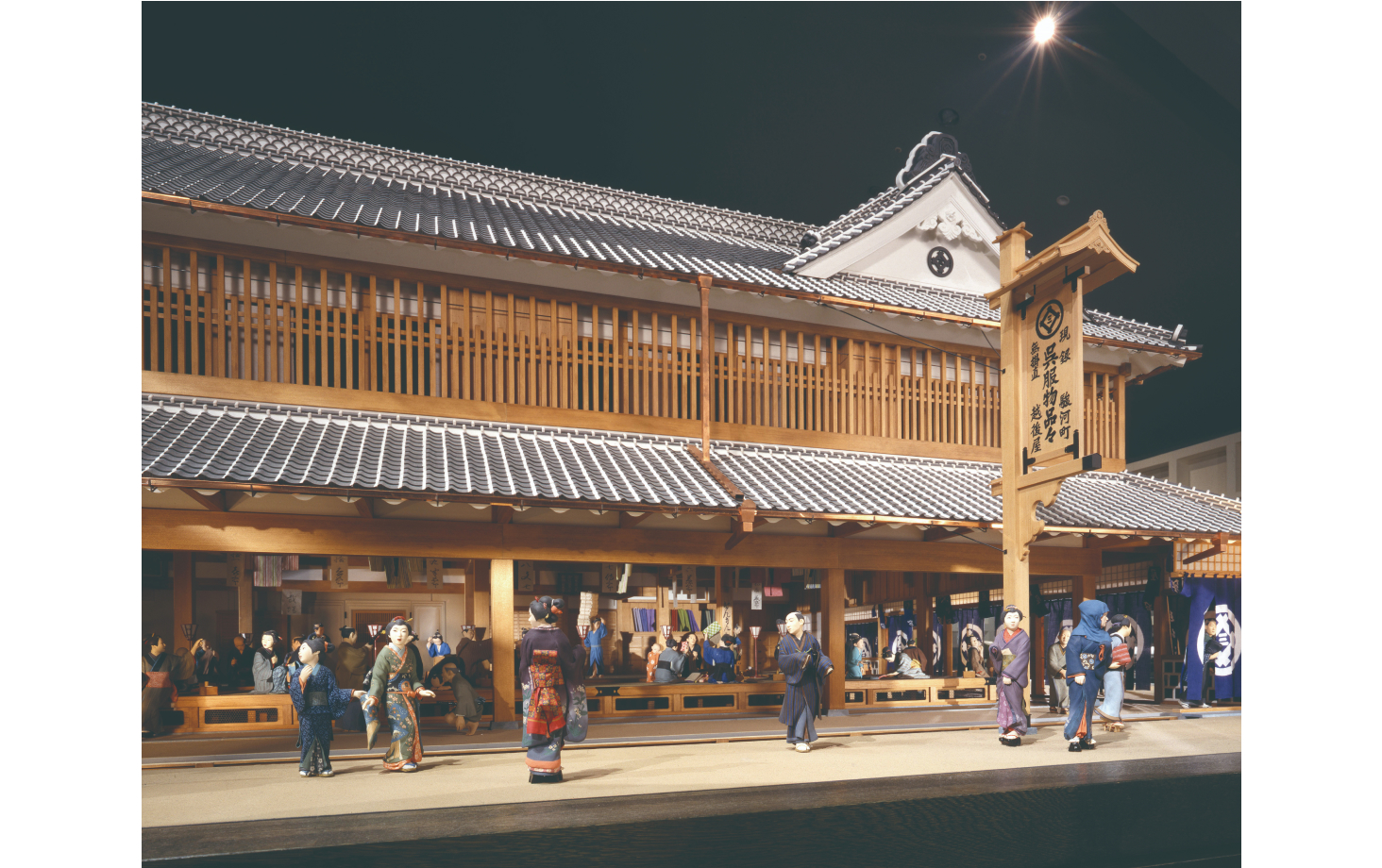
Model of the Mitsui Echigoya Edo Main Store, on display at the Edo-Tokyo Museum (closed for renovation, reopen on March 31, 2026). Echigoya started with 13 employees and a frontage of about 2.7 meters. At its peak in the mid-1700s, its frontage extended about 65 meters, and its employees numbered more than 200.
In 1673, Takatoshi at last opened Echigoya in Edo's Honcho 1-chome district, site of today's Bank of Japan, with his two younger sons in charge. He also opened a kimono-purchasing business in Kyoto under the care of Takahira, his eldest. He himself issued instructions as he journeyed back and forth between Matsusaka and Kyoto.
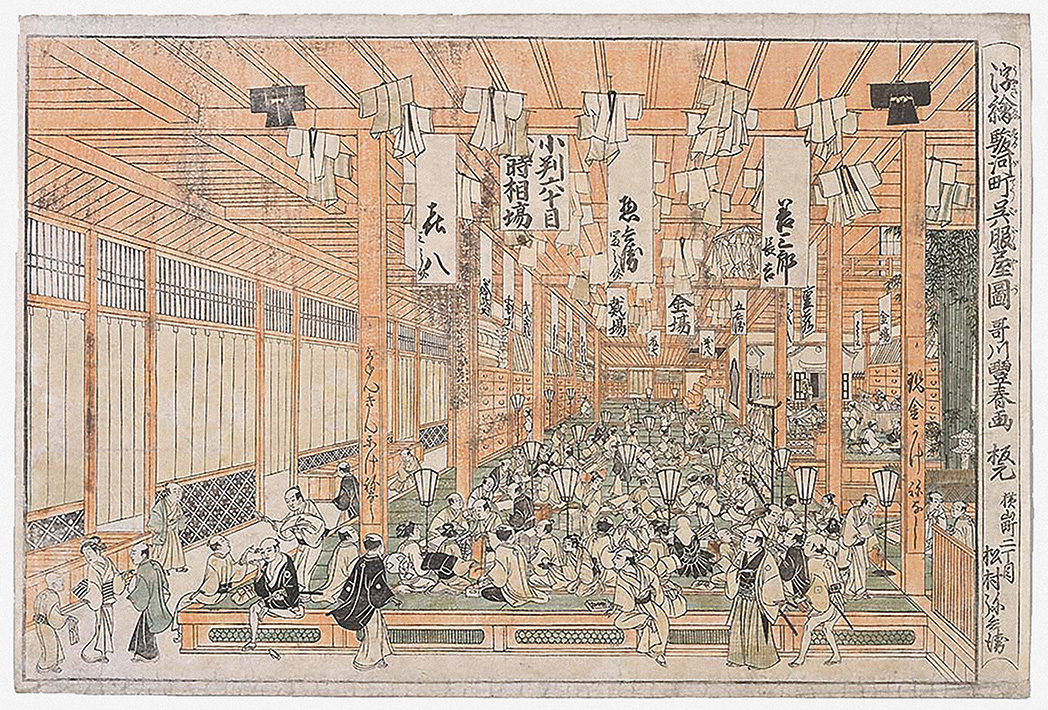
He had finally set up shop in Edo, but it was a small start, with only enough display merchandise to fill one-third of the shop's cabinets. He had to borrow items from relatives to fill the rest. Moreover, the brand new Echigoya did not yet have samurai-class customers but was limited to a clientele of retailers and traveling merchants. Takatoshi compiled a family code on managing the business and its apprentices and servants.
He was particularly thorough on discipline, with prohibitions against selling on credit to samurai and even instructions on the use of pocket money by live-in servants. The code also addressed servant and apprentice well-being, instructing that they be rewarded for excellent work and that they be served meals with ingredients ordered from their hometowns whenever possible. This fairness and appreciation for all who served Echigoya helped unite and sustain it even when it was sabotaged by rival merchants who were jealous of its success.
Excerpts from the Mitsui House Code
• Report every six months on employees who work diligently and with attention to detail. Those who maintain their performance for a year or two will be rewarded.
• Do not quarrel with one another. If a dispute should arise, the elder should hold back his anger and resolve the situation.
• Do not sell on credit to samurai households. If the person in charge of over-the-counter sales sells on credit, the amount will be deducted from his allowance...
• Do not spend more than your prescribed allowance. When you cannot avoid it, first consult with your manager and spend the money only with his permission.
New business practices, the talk of the town — A daily battle with sabotage
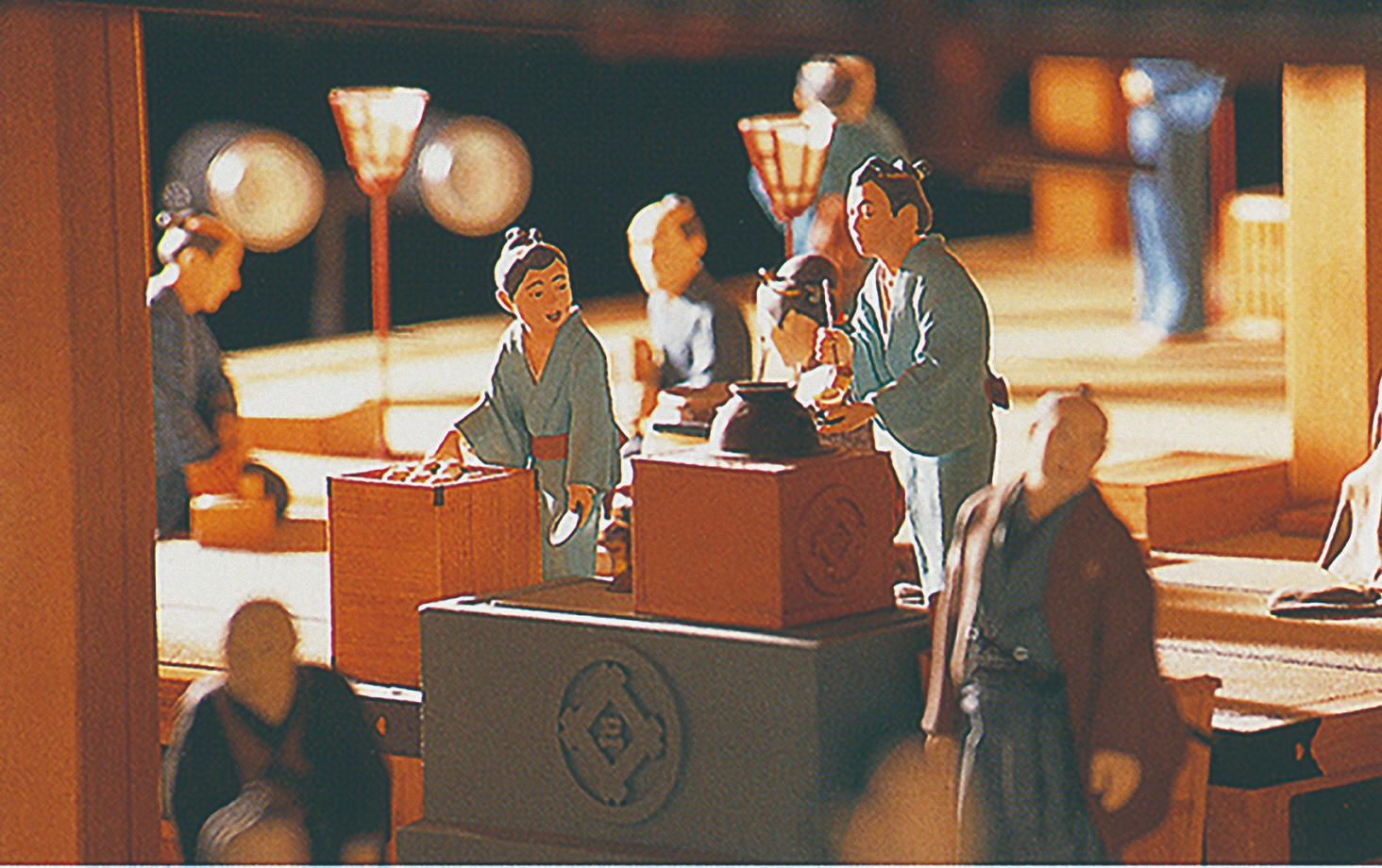
Kimono merchants customarily made purchases based on orders from clients, but Echigoya laid in large stocks of goods at low prices without waiting for orders and even bought up low-end products rejected by other merchants. The latter they sold cheaply to Edo townspeople, pawning any unsold remainders for cash. Kyoto merchants, as the suppliers, appreciated being able to sell in bulk, and Edo commoners liked being able to buy at low prices. Echigoya's reputation — and its sales — grew in both cities.
Takatoshi was also able to purchase large quantities of the wildly popular Matsusaka striped cotton, which looks plain from a distance but special up close. One key factor in Takatoshi's success was that the more prosperous the city became, the more money its townspeople had available to spend on their everyday clothing. Echigoya rode this trend, keenly aware of the needs of this new customer base.
Why "Cash Sales at Fixed Prices" Was So Revolutionary
| Conventional Business Methods | Echigoya's Innovation |
|---|---|
| Merchants make door-to-door calls on customers, to show them samples of cloth | In-store sales allow merchants to serve many customers at once |
| Sales staff can carry only so many bolts of cloth; customers can choose only from among them | Customers can pick up and look at any of the merchandise in the store |
| Suppliers receive orders only after customers have made their purchases; delivery therefore takes time | Customers can buy cloth in any amount on the spot, and tailoring and processing can be handled immediately in-house |
| Payments are made only twice a year, in summer and at the end of the year. They cannot be made at the delivery stage | Cash payments can be made on the spot. The store can use the receipts immediately to fund its next purchases |
| Collecting money is labor intensive: as each collection date approaches, time and effort go into checking accounts receivable and updating the records. The fees added to cover this raise prices all around | By settling their bills on the spot, stores can dispense with these administrative tasks and thereby keep prices lower |