
Takatoshi’s teaching
A record for posterity
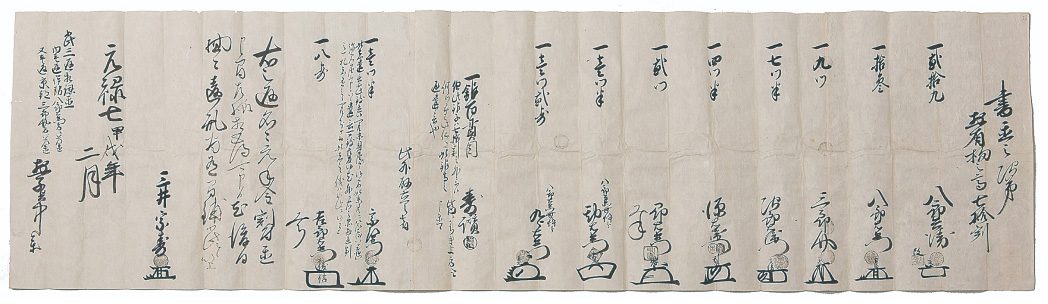
Shortly before his death, Takatoshi created a will dividing his assets among his many children. His sons responded by presenting a written oath (Issatsu) to the eldest, Takahira, who assumed his father’s place. They promised to share all the assets and the stores, rather than dividing them up, and to maintain the business as it had been. The joint ownership of the business later formed the core of the Mitsui family’s cohesion.
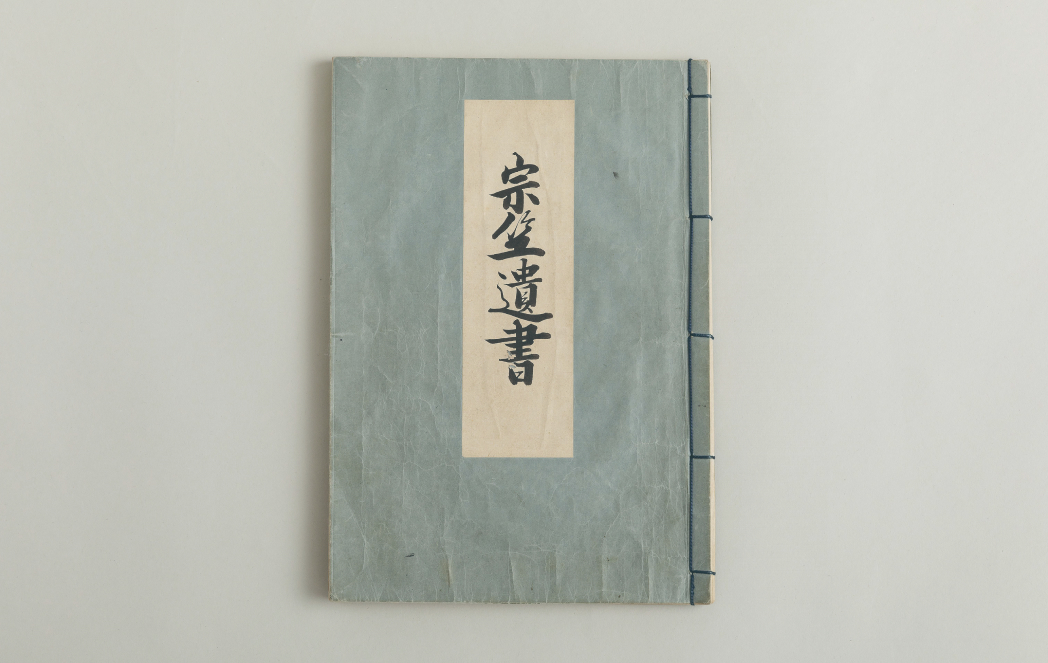
It was Takatoshi’s second and third sons, Takatomi and Takaharu, who recorded their father’s teachings in their writings, Takatomi Soan and Shobai-ki (see p.18). Sochiku isho [Takatoshi’s Testament], written by Takahira in his later years, added to these the Shinjo icchi, or “family code of brotherly union” which urged family cohesion, self-discipline, and harmony among all ranks serving the business. These commercial and ethical principles remained the Mitsui’s family’s credo until the compilation of the Mitsui Family Constitution in 1900. (*1) The city of edo suffered a severe recession in the 1720s, and great merchant houses failed one after another.Takatoshi’s grandson, Takafusa hoped that by writing about the causes of these failures, he could help educate future generations of merchants. His Chonin koken-roku, or “ Some Observations on Merchants,” gave accounts of 50 merchants. The idea, suggested by a trusted clerk, Nakanishi Sosuke, (*2) enabled Takafusa to pass on his grandfather’s wisdom and teach new Mitsui generations to face changing times with care and foresight.
*1 The Mitsui Family Constitution. Written in 1900, when a modern legal system was beginning to take hold, this new code stressed the importance of continued joint ownership of family assets. *2 Nakanishi was an early officer in the Mitsui business. At the risk of his own position, he helped establish the Omotokata, which determined Mitsui policy through consultations among Mitsui family members and senior clerks
Riding the winds of change
Echigoya first opened in 1673.
The next 350 years brought the 1860s Boshin War, the 1940s Pacific War, and the post-WWII dissolution of zaibatsu conglomerates.
Mitsui’s story is one of resilience.
The turbulent 1860s-70s transition:the birth of banks and trading companies
Mitsui was unavoidably drawn into the turmoil of the transition from Edo to Meiji rule. Kimono sales dropped and the financial industry faced deficits. Mitsui's coffers suffered, too.
Mitsui asked Minomura Rizaemon, an intimate with the shogunal Commissioner of Accounts, to help stem government appropriations of cash from Mitsui. A brilliant success, he was put in charge of government-related accounts and then moved into major roles in Mitsui's financial business. Mitsui's far-sightedness is plain: mid-career outsiders were rarely hired in those days.
New forces battled the Edo shogunate in the 1860s. If Mitsui joined the losing side, it too would lose, so it maintained ties with both, helping the Satsuma domain procure provisions and military funds, and then supporting the new, financially strapped Meiji government. In 1873, Mitsui helped Shibusawa Eiichi and Inoue Kaoru set up Japan's first national bank. Three years later, it founded Mitsui Bank, Japan's first private bank, and the Mitsui Trading Company.*
Minomura persuaded trading-company executive Masuda Takashi to head the venture, and he turned the 16-member firm into a trading company that spanned the globe.
*The original Mitsui Trading Company was disbanded under post-World War Ⅱ Occupation rule, but its affiliates were recombined in 1959 to form today’s Mitsui & Co.
Inscribing the times with its name
A "Mitsui of the People"
Further trials followed. The 1882 establishment of a central bank — the Bank of Japan — deprived Mitsui Bank of government funds, a key source of capital. Mitsui Bank faltered and bank runs followed. Nakamigawa Hikojiro joined Mitsui as a new director in 1891. President of the Sanyo Railway, he was nephew of Keio University founder Fukuzawa Yukichi and himself a Keio graduate. He disposed of non-performing loans, brought in capable new personnel, and closed the government-funds branch to eliminate collusion with the government. Oji Paper (now Oji Holdings, Nippon Paper Industories), Shibaura Seisakusho (now Toshiba), Tomioka Silk Mill, and others were added to the Mitsui group.
Mitsui bought the government's Miike Mine in 1889 (later Mitsui Mine). Miike was Japan's largest producer of coal and a veritable "gold mine" for Mitsui. Mitsui also expanded into the coal-dependent chemical industry, establishing today's Mitsui Chemicals and Denka Co. Meanwhile, Dan Takuma (later Mitsui Chairman) joined the company and with the 10th generation head of the Mitsui family's Kitake branch, raised the company to new heights. After Masuda retired, Mitsui continued to focus on industrial development, investing in many affiliates including Toyo Rayon (now Toray Industories), Nippon Flour Mills (NIPPN), Japan Steel Works, Sanki Engineering, Onoda Cement (Taiheiyo Cement), Mitsui Engineering & Shipbuilding (Mitsui E&S), and Mitsui Senpaku (Mitsui O.S.K. Lines). Mitsui became Japan's largest conglomerate, with a skilled employee base in banking, manufacturing, and mining.
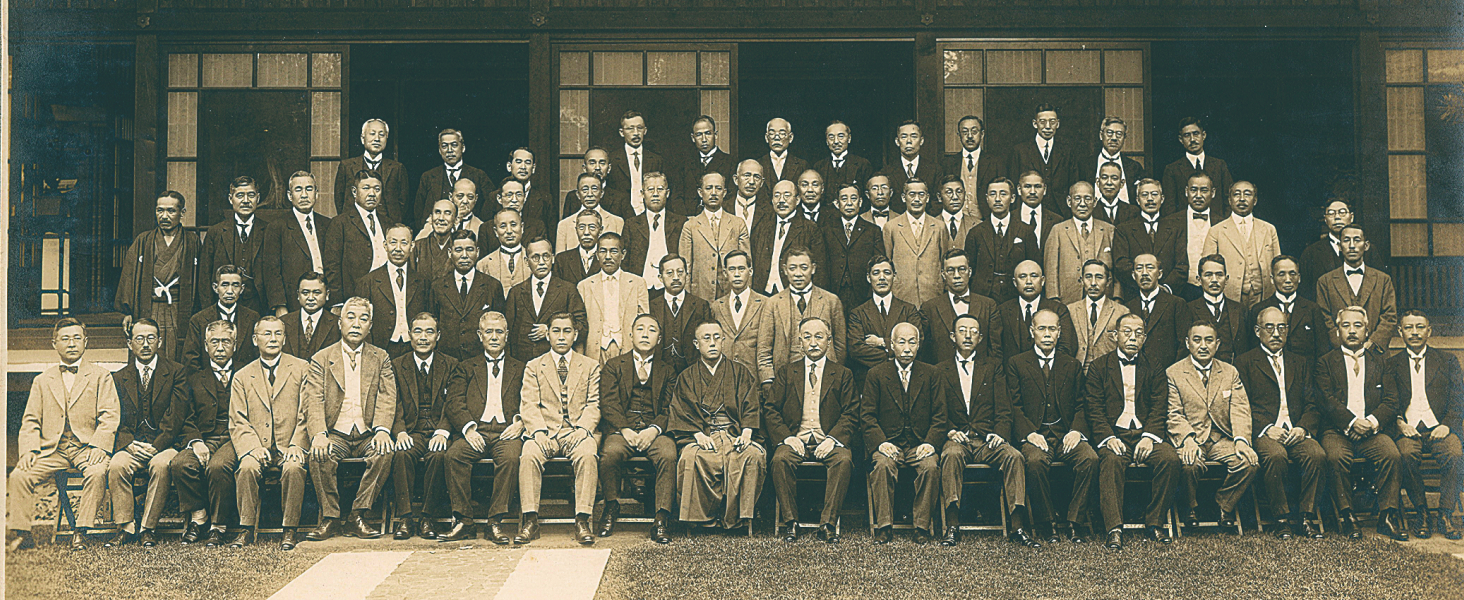
The Allied Occupation of Japan that followed World War II dismantled the Mitsui conglomerate, but its affiliates rebuilt their connections in various forms and retain them to this day. One such link among them is The Mitsui Public Relations Committee, introduced below.
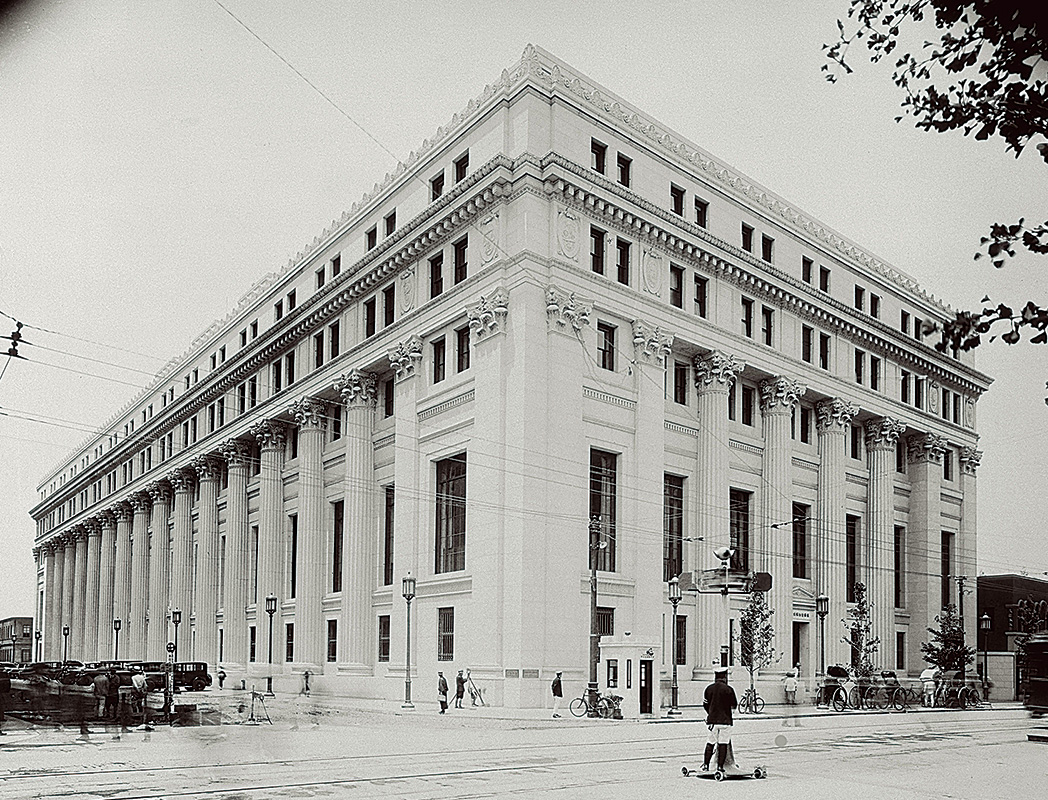
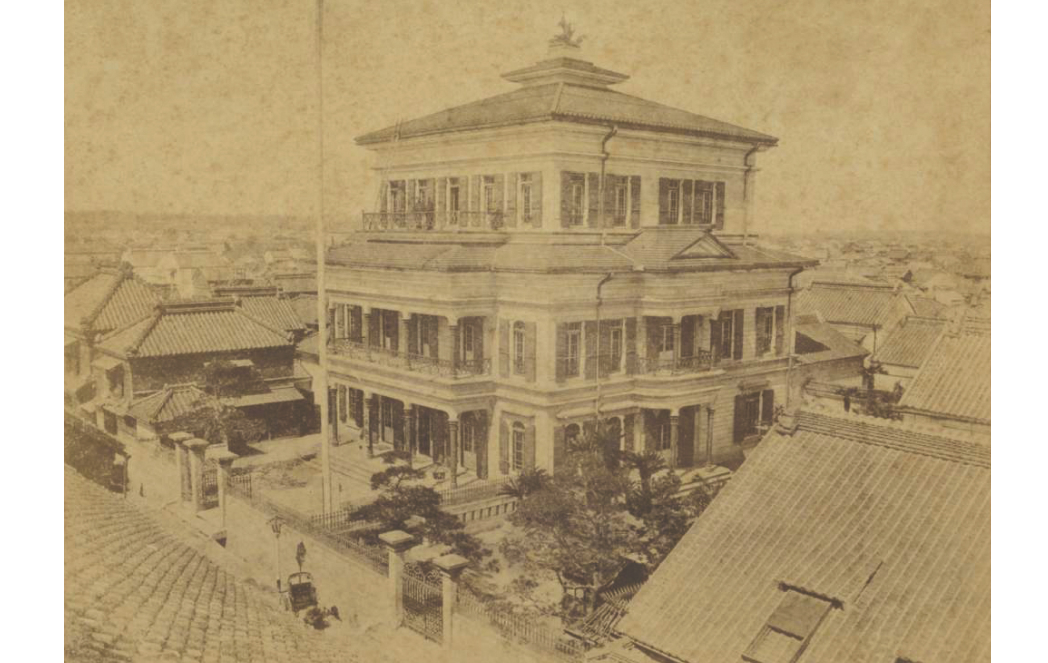
Mitsui Main Building, completed in 1929, today designated an National Important Cultural Property. Then-Chairman Dan Takuma requested an earthquake- and fire-resistant design.(Mitsui Bunko collection)
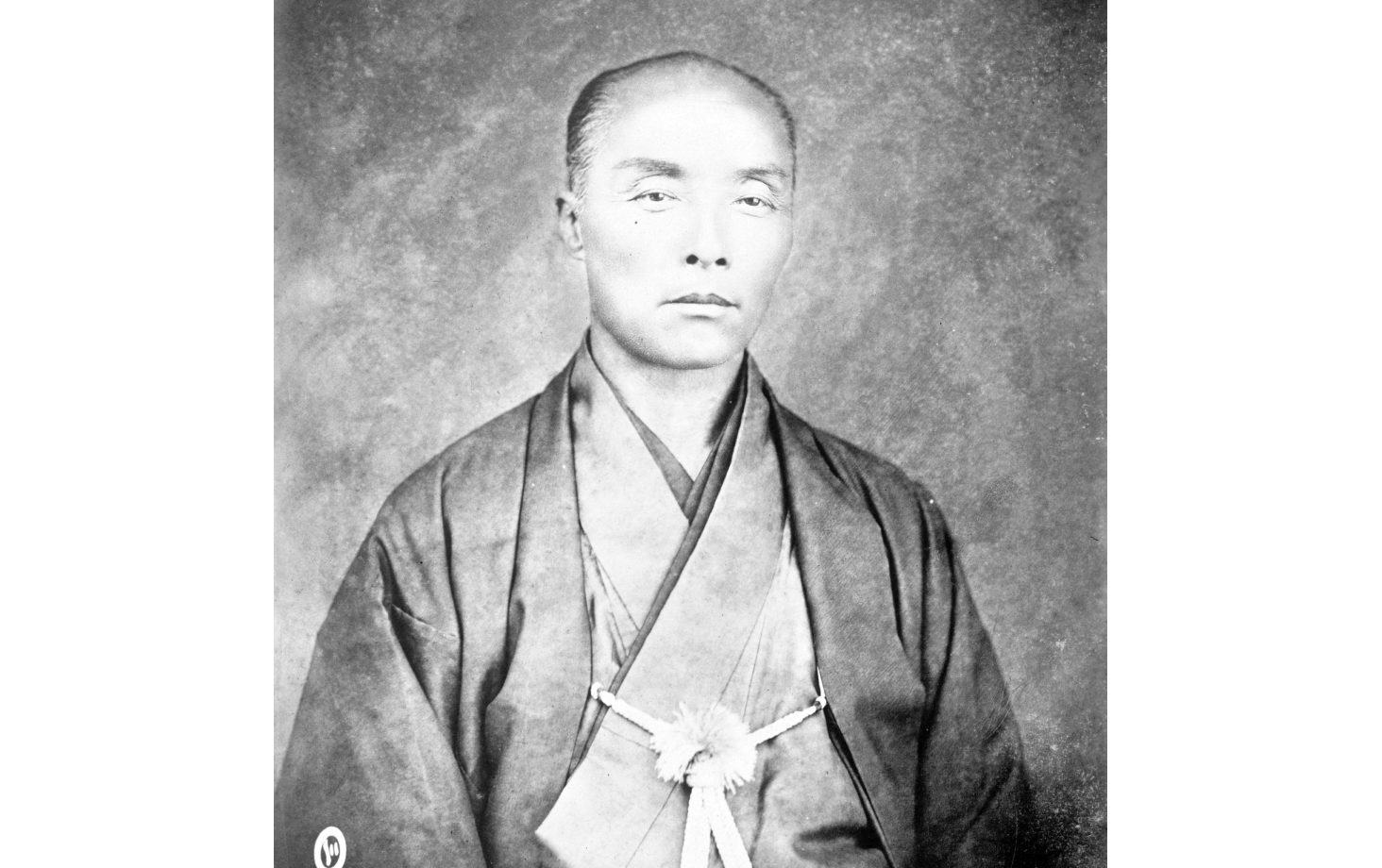
Minomura Rizaemon (1821–1877)
Son of a samurai official from the north. His father left his post when Minomura was a child, and together they roamed the country. Married into an Edo sugar- and oil-merchant’s family at age 25; later, invested in a money-exchange firm. Worked for the shogunate’ s last financial magistrate, Oguri Kozukenosuke, before joining Mitsui.(Mitsui Bunko collection)
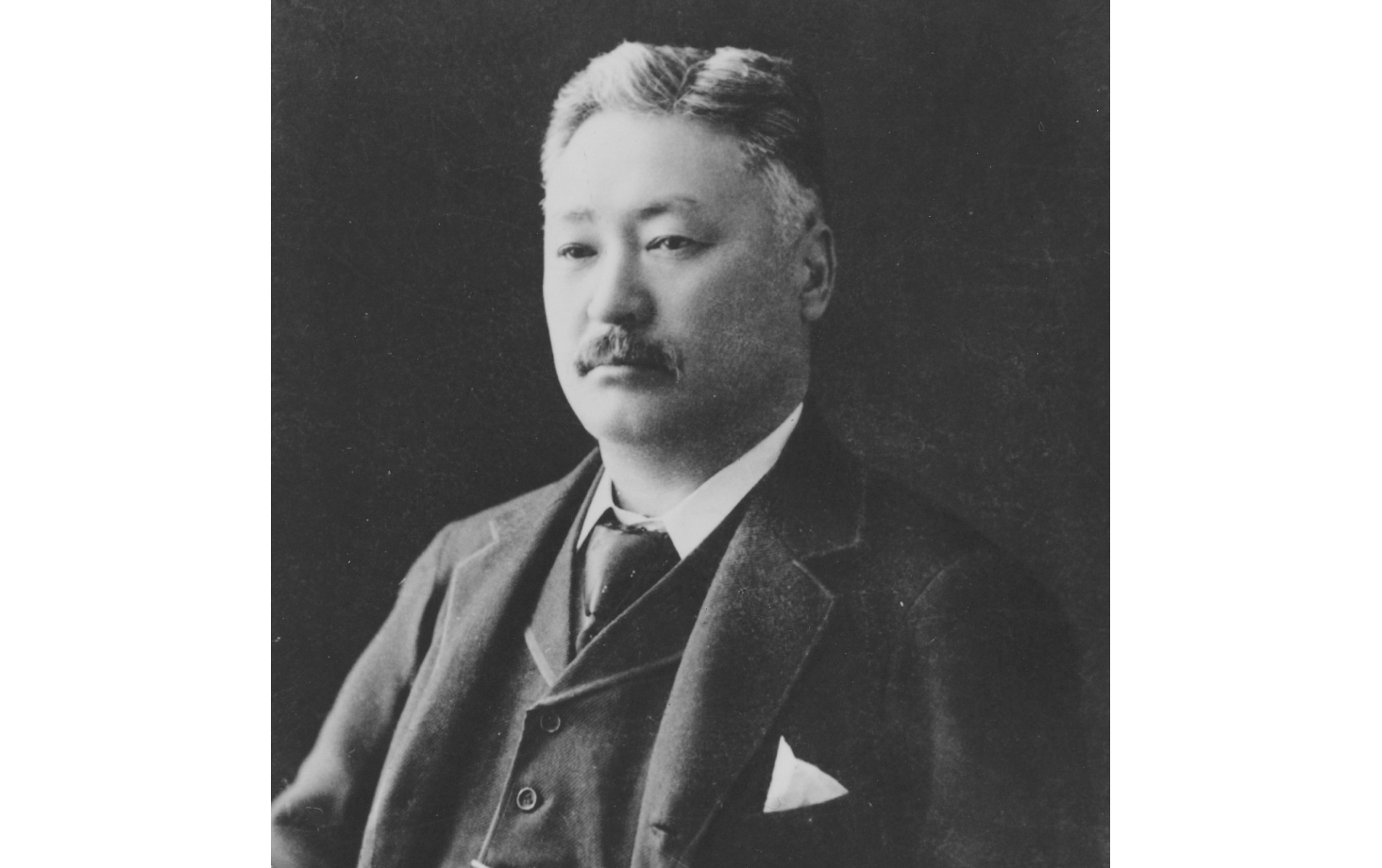
Masuda Takashi (1848–1938)
Born into a Sado Island family of a government official. Served on the 1863 shogunal mission to France, later joined the Ministry of Finance. With his mentor, Inoue Kaoru, founded Senshu Company, oversaw operations there. Later turned the Mitsui Trading Company into a global enterprise and helped lead the entire Mitsui conglomerate.(Mitsui Bunko collection)
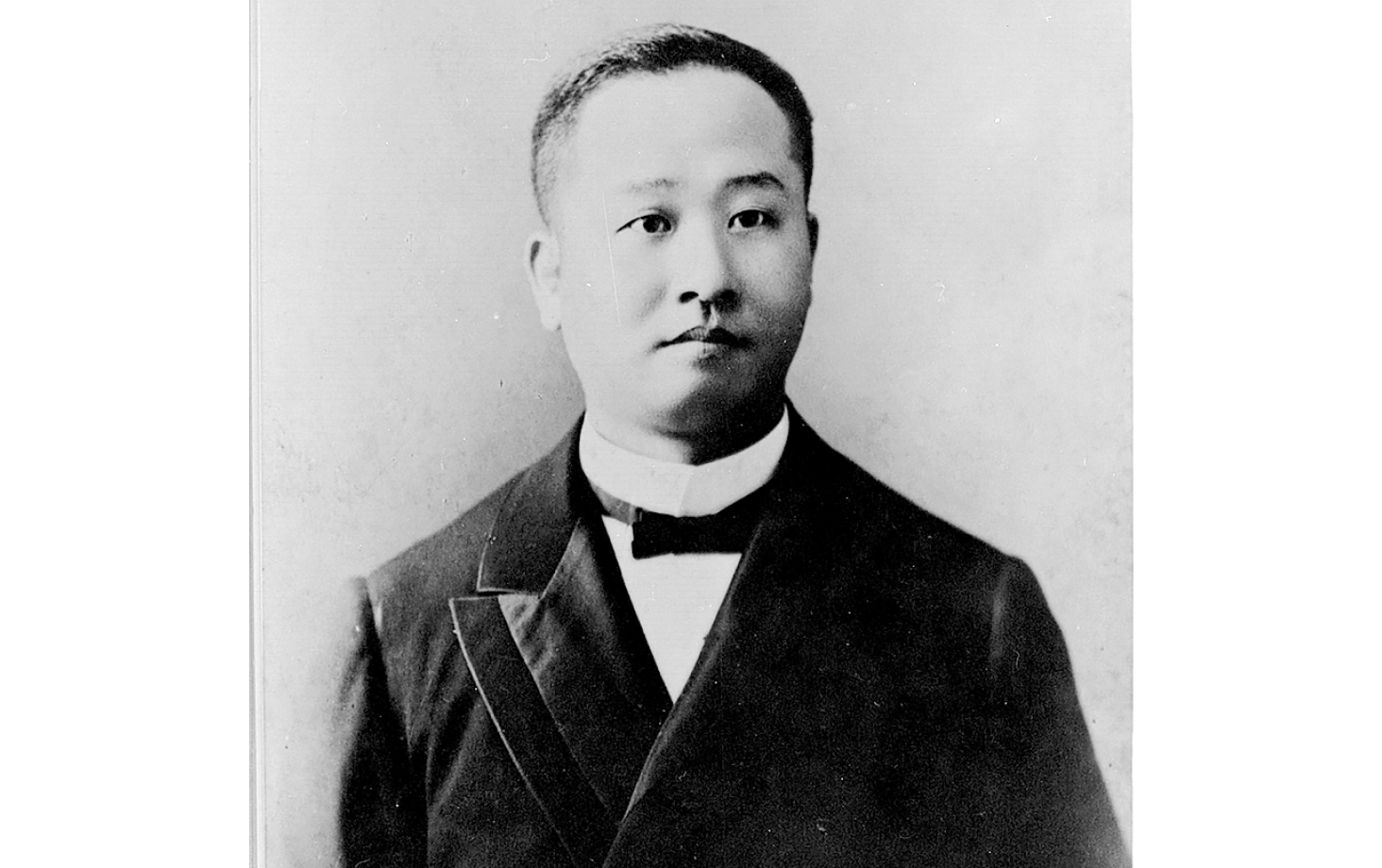
Nakamigawa Hikojiro (1854–1901)
Nephew of leading westernizer Fukuzawa Yukichi. Graduated Keio University, entered the Ministry of Engineering before launching the Jiji Shinpo newspaper with Fukuzawa. Later an active leader of Mitsui Bank and a major investor in industrial firms.(Mitsui Bunko collection)
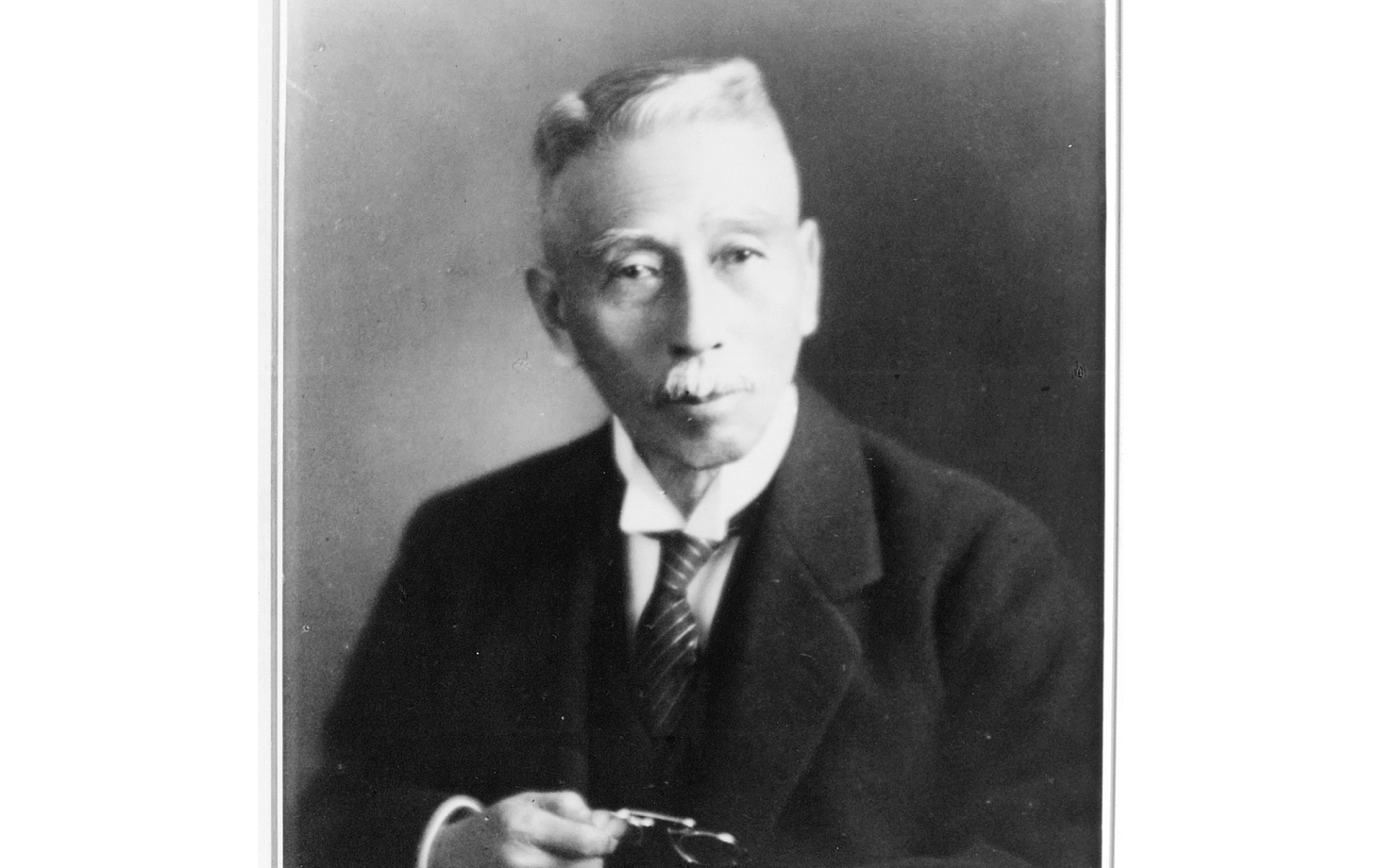
Dan Takuma (1858–1932)
Selected at age 14 by the Fukuoka domain to study in the United States. Graduated the Massachusetts Institute of Technology with a Mining degree, returned to Japan to teach, then entered the Ministry of Engineering. Worked as supervisor at Miike Coal Mine Co. from 1889, then as engineer, manager, and Chairman of Mitsui Co., Ltd.(Mitsui Bunko collection)